
Why Contractors Charge Different Rates: A Homeowner’s Guide
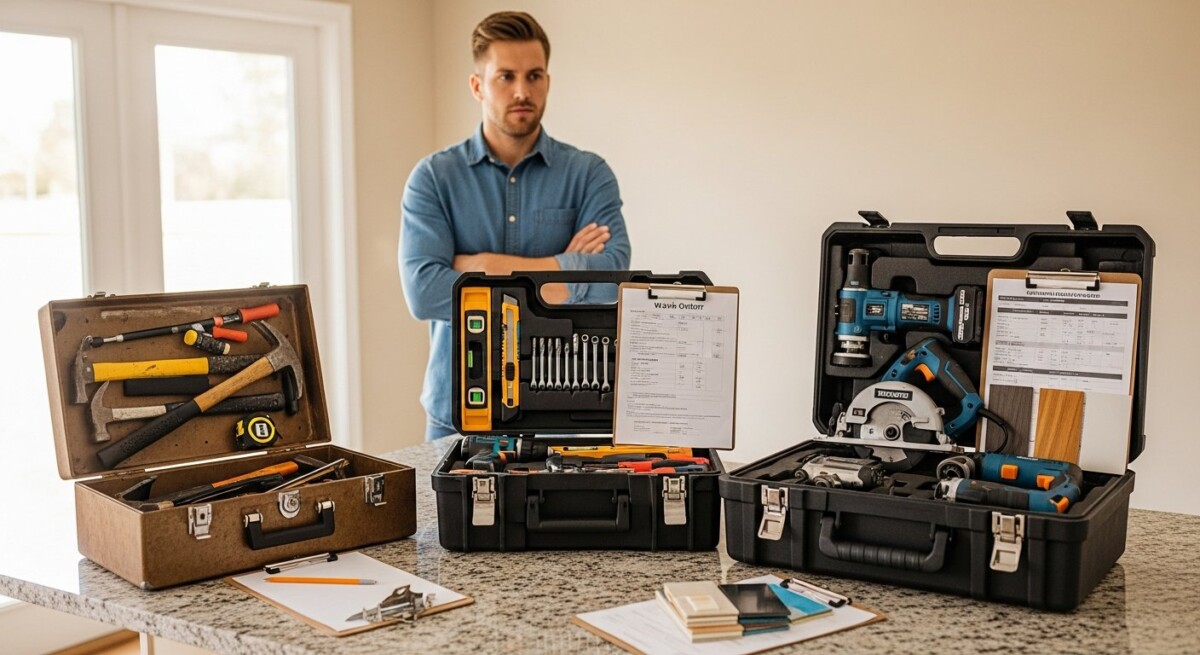
You receive three quotes for the same kitchen remodel. One contractor bids $12,000. Another quotes $18,500. The third comes in at $24,000. All three have good reviews and proper licenses. Which one do you choose? To answer that, you first need to understand why contractors charge different rates in the first place. Pricing differences are not random. They reflect real variations in business costs, skill levels, materials, and risk. This guide breaks down the key factors that cause price discrepancies and shows you how to use that knowledge to make smarter hiring decisions.
Overhead and Business Structure
Every contractor runs a business. That business has fixed costs that vary dramatically from one company to another. A solo operator working out of a home office has minimal overhead. She might pay for a business license, basic insurance, fuel, and marketing. A mid-sized firm with a storefront, an office manager, a warehouse, and multiple crews carries much higher monthly expenses. Those costs must be spread across every job they complete.
Overhead includes rent or mortgage on shop space, utilities, phone systems, software subscriptions, vehicle payments, liability insurance, workers compensation, payroll taxes, accounting fees, and advertising. A contractor with 20 percent overhead needs to charge more than one with 10 percent overhead just to break even on the same job. When you see a wide range of quotes, the first place to look is the business structure behind each bid. In our guide on why contractor quotes vary, we explain how to evaluate what you are actually paying for beyond materials and labor.
Larger companies often offer more stability, faster timelines, and backup resources. The trade-off is a higher price. A smaller contractor might give you a lower rate but carry more scheduling risk. Neither is inherently better; they simply serve different priorities.
Labor Rates and Skill Levels
Labor is usually the largest single component of a contractor’s bid. The hourly wage a contractor pays his crew directly affects the final price. A master carpenter with 20 years of experience commands twice the wage of an apprentice. Companies that invest in training, certifications, and experienced foremen naturally charge more because their people work faster, make fewer errors, and deliver higher quality finishes.
Labor rates also vary by region and trade. In a major city like New York or San Francisco, skilled tradespeople earn significantly more than in rural areas. Some contractors specialize in high-end finish work, while others focus on functional, code-minimum repairs. The rate difference between these two tiers can be 30 to 50 percent for the same project scope.
When comparing quotes, ask about crew experience and supervision. Does the bid include a dedicated project manager on site? Are subcontractors used, and what are their rates? Knowing who will actually do the work helps you understand why one contractor charges more than another.
Material Selection and Markup
Contractors do not all use the same materials. One bid might specify builder-grade laminate countertops; another quotes quartz. Those material costs differ by hundreds or even thousands of dollars. However, material pricing is only part of the story. Contractors also mark up materials to cover procurement time, delivery coordination, storage, and warranty risk. That markup can range from 10 percent to 40 percent depending on the contractor’s business model.
Some contractors pass through material costs at their actual price plus a small handling fee. Others add a significant margin to compensate for the risk of price fluctuations or damaged goods. A contractor who buys in bulk from a wholesale supplier may get a discount that he does not fully pass on to you. That is not necessarily deceptive. It is one way he stays profitable while still offering competitive labor rates.
To make fair comparisons, ask each contractor to provide a line-item breakdown of materials with brand names and model numbers. Then you can see whether the price gap comes from different choices or different markups.
Scope of Work and Precision
The same project description can be interpreted very differently by different contractors. One contractor might include demolition, disposal, permits, and final clean-up in his base bid. Another may treat those as extras. The more vague the original scope, the wider the price spread will be. This is why detailed, written scopes of work are essential for accurate comparisons.
A low quote might actually be incomplete. It could exclude structural repairs, electrical upgrades, or window flashing that another contractor considers necessary. Conversely, a high quote might include premium features and warranties that the low bid omits. Always ask for a list of inclusions and exclusions for each line item.
In our article on receiving multiple contractor offers, we walk through how to standardize bids so you can compare apples to apples. Without that step, you are guessing at the real cost.
Seasonality and Demand
Contractor pricing is not static. It fluctuates with market demand, weather, and economic cycles. In spring and summer, when roofing and deck projects peak, many contractors raise their rates simply because they can afford to be selective. In slower months, the same contractors may offer discounts or flexible terms to keep crews busy.
Local economic conditions also play a role. During a building boom, skilled labor becomes scarce, driving up wages and therefore bid prices. A recession often pushes prices downward as competition for work intensifies. Knowing the current market climate in your area helps you interpret why contractors charge different rates at different times of the year.
If your timeline allows, consider scheduling your project during the off-season. You may receive lower quotes and more attentive service. However, be cautious: a very low off-season bid could signal desperation or inexperience, not a bargain.
Insurance, Licensing, and Bonding
Legitimate contractors carry liability insurance, workers compensation, and sometimes performance bonds. These protections add substantial cost to their overhead. A contractor who skips insurance can offer a much lower price because he is not paying those premiums. But that low price exposes you to significant financial risk if an accident or injury occurs on your property.
The cost of insurance varies by trade and claim history. A roofer pays more for liability coverage than a painter because roof work is more dangerous. Contractors with clean safety records get lower premiums and may pass on some savings. Those with past claims face higher rates, which they must recover through bids.
Always verify licensing and insurance before any work begins. Ask for certificates of insurance naming you as an additional insured. A contractor who charges more but is fully protected is often the smarter choice over an uninsured low bidder.
Profit Margin and Business Goals
Every contractor needs to make a profit to stay in business. However, profit margins vary based on the contractor’s business model and goals. A small operation might aim for a 10 percent profit on each job to keep prices competitive and win volume. A premium custom builder may target 25 to 30 percent because they deliver a higher level of service, design input, and warranty support.
Some contractors use a flat markup on total costs. Others use a percentage markup that increases as the project grows. The way a contractor calculates profit affects the final number on your bid. It is not unreasonable for a contractor to earn a healthy profit. The key is understanding what that profit buys you: better project management, faster completion, and peace of mind.
When evaluating high and low quotes, ask yourself what level of service you actually need. For a simple, low-risk project, a smaller margin may be acceptable. For a complex renovation involving structural changes, a higher margin that includes robust oversight can prevent costly mistakes.
How to Use This Information When Getting Quotes
Understanding why contractors charge different rates gives you negotiating power and confidence. Follow these steps to compare bids effectively:
- Request at least three quotes from licensed contractors with good references.
- Provide the same detailed written scope of work to each bidder.
- Ask for a line-item breakdown of labor, materials, permits, and fees.
- Clarify what is included and excluded in each bid.
- Verify insurance and licensing for every contractor.
- Consider the contractor’s experience, reputation, and business stability as part of the price.
- Trust your gut: if one quote is drastically lower than the others, ask why before accepting.
Armed with these insights, you can move past the confusion of wide-ranging estimates and focus on value rather than just the lowest number. For a deeper look at how renovation estimates can differ even for identical projects, read our post on why renovation estimates differ. It provides real-world examples and practical tips for narrowing the gap.
Finally, remember that the goal is not to find the absolute cheapest contractor. It is to find one who charges a fair price for the quality, reliability, and protection you need. When you understand the reasons behind the rates, you become a smarter buyer and a more confident project manager. That knowledge alone can save you thousands of dollars and countless headaches.

About

How to Handle Multiple Contractor Calls: 7 Proven Strategies
Stop feeling overwhelmed by contractor calls. Learn a proven system to manage multiple quotes, compare offers, and hire the best pro for your project.

Why Every Homeowner Needs a Project Cost Estimation Platform
Avoid costly surprises by using a project cost estimation platform to plan your home renovation budget with accurate, transparent pricing.
Why Contractors Charge Different Rates: A Homeowner’s Guide
Understand why contractors charge different rates so you can compare quotes fairly and avoid overpaying or hiring an unqualified low bidder.
Find a Pro!
"*" indicates required fields