
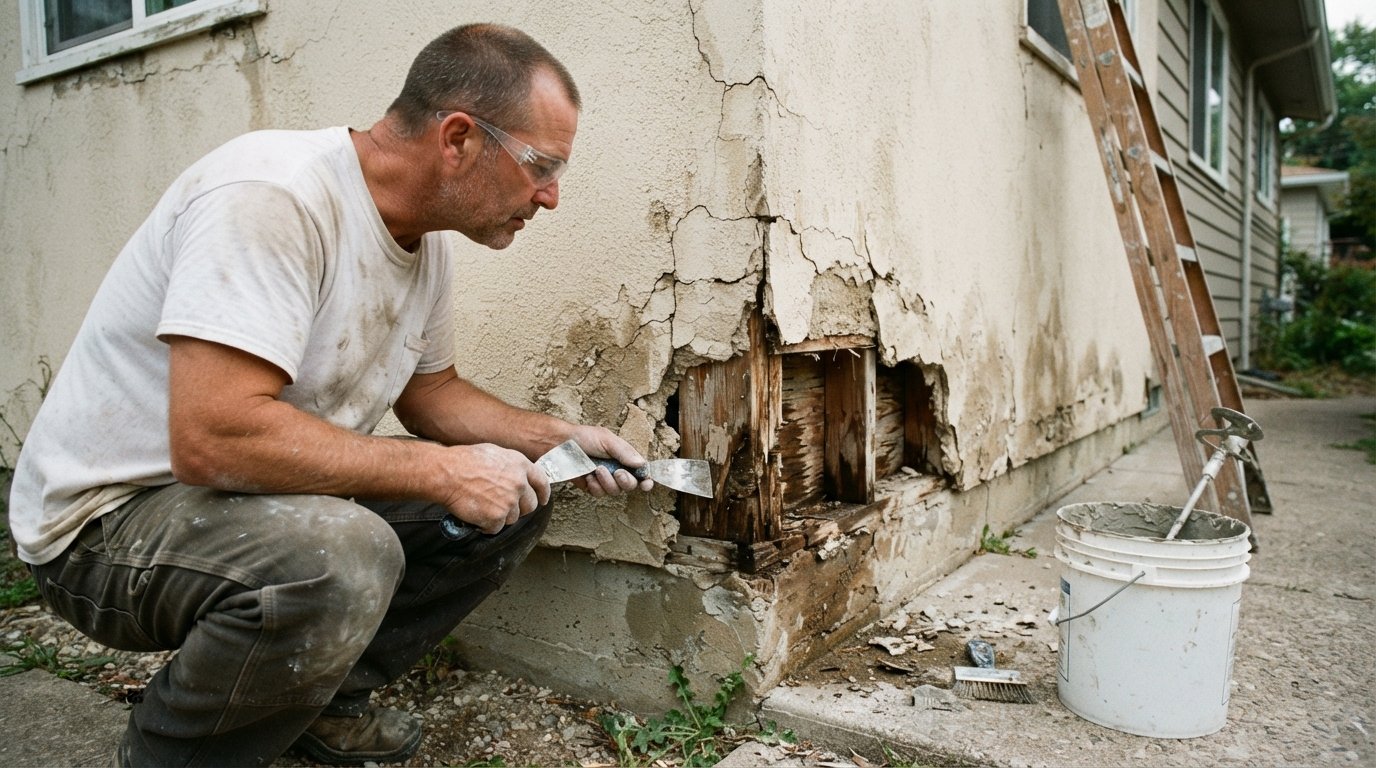
Stucco Repair Cost and When to Re-Stucco a Whole Wall
Stucco repair cost and when to re-stucco a whole wall explained with real pricing and warning signs. Call 8333658755 for a free local quote.

By Jessica Reis
Learn more about Stucco Repair for guides, costs, and what to expect.
Compare Stucco Repair Pros Near You

Enter your ZIP code to compare top-rated local professionals and request free quotes.
Stucco has protected homes for centuries, and when it fails, the damage rarely stays surface level. Moisture sneaks behind cracked or crumbling cement, wood framing rots, and what began as a hairline fracture can turn into a five-figure structural problem. That is why homeowners searching for stucco repair cost and when to re-stucco a whole wall are really asking two questions: what will this set me back, and is patching even worth it? The answer depends on the extent of the damage, the type of stucco on your home, and how much of the wall has already failed. This guide breaks down real pricing, the warning signs that point toward full replacement, and how to plan the project without overspending.
What Drives Stucco Repair Cost
Stucco repair pricing is not a flat rate. Contractors calculate cost based on square footage, access difficulty, the type of stucco (traditional cement, acrylic, or EIFS), and whether water has reached the substrate behind the cladding. A small crack repair might cost a few hundred dollars, while a full wall replacement can run into the thousands. Most homeowners pay between $500 and $2,500 for moderate repairs, but that range swings wildly depending on the specific problem.
Labor typically accounts for 50 to 70 percent of the total bill. Stucco work is skilled trade labor, and in many markets there are fewer qualified plasterers than general contractors, which pushes prices up. Materials are relatively inexpensive by comparison, but specialty finishes, color matching, and texturing to blend with existing walls add cost. If scaffolding or a lift is required, expect another $300 to $1,200 depending on height and duration.
Here are the main cost factors contractors evaluate before quoting a stucco job:
- Extent of damage: Hairline cracks cost far less than large sections with delamination or water intrusion.
- Height and access: Second-story and hard-to-reach areas require scaffolding, lifts, or ladders, all of which add labor hours.
- Stucco type: Traditional three-coat cement stucco, acrylic finishes, and EIFS each have different repair methods and material costs.
- Underlying damage: Rotted sheathing, framing, or house wrap must be repaired before new stucco goes on, and that work is billed separately.
- Color and texture matching: Blending a patch into an existing wall is difficult and time-consuming, especially on older or custom-textured homes.
Regional pricing also matters. In high-cost metro areas like San Francisco, Los Angeles, or New York, stucco labor rates can be double what they are in the Midwest or South. Homeowners in Atlanta and across Georgia often see mid-range pricing, but demand after storm season can spike rates. Always get at least three local quotes, because stucco pricing is far less standardized than roofing or painting.
Typical Stucco Repair Costs by Project Type
To make budgeting easier, it helps to look at common repair scenarios and what they typically cost. These figures are national averages and should be treated as planning guidelines, not fixed quotes. Your actual price will depend on your location, the contractor, and what they find once they open up the wall.
- Hairline crack sealing: $150 to $500. Small cracks under 1/16 inch wide can often be caulked and painted without full patching.
- Minor patch repair (under 10 square feet): $300 to $800. This covers small areas of crumbling or chipped stucco.
- Moderate repair (10 to 50 square feet): $800 to $2,000. Includes removal of damaged stucco, substrate inspection, and re-coating.
- Large repair (50 to 200 square feet): $2,000 to $6,000. Often involves scaffolding and partial wall replacement.
- Full wall re-stucco: $6,000 to $15,000 or more, depending on wall size, height, and finish.
These numbers assume no hidden structural damage. If the contractor finds rotted framing, mold, or failed flashing, expect the bill to climb by 30 to 100 percent. That is why a thorough inspection before work begins is critical. A cheap patch job over hidden rot is money wasted, because the new stucco will fail within a year or two.
For homeowners planning broader repairs, it helps to understand how stucco fits into your overall maintenance budget. Our guide on average home repair project costs breaks down what homeowners typically spend across common repair categories, which can help you prioritize stucco work against other pressing projects.
When to Re-Stucco a Whole Wall Instead of Patching
This is the question that trips up most homeowners. Patching is cheaper in the short term, but it is not always the right call. Stucco fails for reasons, and if those reasons are not addressed, patches will keep failing. The decision comes down to how widespread the damage is, how old the stucco is, and whether moisture has compromised the wall system.
As a general rule, if more than 25 to 30 percent of a wall's surface is damaged, cracked, or delaminating, full re-stucco is usually more cost-effective than repeated patching. The labor to prep and blend multiple patches across a large area approaches the cost of replacing the whole wall, and the result is often visually uneven. Older stucco (30 years or more) also tends to fail in waves, meaning one patch today leads to three more next year.
Here are the clearest signs that a full wall re-stucco is the smarter investment:
- Widespread cracking: If cracks cover multiple areas and continue to reappear after patching, the stucco has lost its integrity.
- Hollow or drummy areas: Tapping the wall and hearing a hollow sound means the stucco has separated from the substrate, a problem that spreads.
- Water intrusion and staining: Dark streaks, efflorescence (white mineral deposits), or soft spots indicate moisture is getting behind the wall.
- Visible rot or mold: If the substrate, sheathing, or framing is compromised, the entire wall section needs to come off.
- Failed previous repairs: If patches from the last few years are already cracking or falling off, the underlying issue was never fixed.
There is also a cosmetic threshold. If you are preparing to sell your home and the stucco looks tired, patched, or mismatched, a full re-stucco can improve curb appeal and appraised value. Buyers and inspectors notice failing stucco, and it often becomes a negotiation point. In that case, the cost of re-stuccoing may be offset by a smoother sale.
The Risk of Delaying Stucco Repair
Stucco is a drainage and weather barrier, not just a decorative finish. When it cracks or separates, water finds its way in. That water does not evaporate quickly in most wall assemblies, especially in humid climates. It sits against the sheathing and framing, causing rot, mold, and eventually structural decay. What starts as a $400 crack repair can become a $20,000 framing and remediation project if ignored for a few years.
Mold is another serious concern. Stucco walls that trap moisture create ideal conditions for mold growth inside the wall cavity, which can affect indoor air quality and require professional remediation. In severe cases, homeowners have had to remove entire wall sections and replace insulation, drywall, and framing. The health and financial costs of that scenario far outweigh the price of timely stucco repair.
Delaying also affects insurability and resale. Many home inspectors flag stucco cracks and recommend further evaluation, which can scare off buyers or give them leverage to demand concessions. Some insurance carriers may also deny claims for water damage if they determine the stucco was neglected. Addressing stucco problems early protects both your home's value and your ability to insure it.
How to Hire the Right Stucco Contractor
Stucco is a specialized trade, and not every general contractor or handyman has the skill to repair or replace it properly. A bad stucco job is easy to spot within a year: cracks reappear, patches pop off, and the texture never quite matches. Hiring the right professional is the single most important factor in getting a repair that lasts.
Start by looking for contractors who specialize in stucco and plaster, not just general exterior work. Ask for proof of license, insurance, and a portfolio of similar projects. Check references and, if possible, visit a completed job to see how the stucco has held up over time. Get at least three written estimates that break down labor, materials, and any substrate repair separately, so you can compare apples to apples.
For homeowners who want to streamline the process, freequotes.contractors connects you with pre-vetted local professionals and lets you request multiple no-obligation quotes in one place. That saves hours of phone calls and gives you a clearer picture of fair market pricing in your area. Whether you use a matching service or find contractors on your own, never hire based on price alone. The cheapest bid often cuts corners on prep work, which is where stucco durability is won or lost.
Before signing a contract, confirm the scope of work in writing. It should specify the square footage, the number of coats, the finish texture, the color, and how substrate damage will be handled if discovered. Ask about warranty terms and whether the contractor will return to fix any cracks that develop in the first year. A reputable stucco contractor will stand behind their work.
Budgeting and Planning Tips for Stucco Projects
Stucco repair is rarely a planned expense, which makes budgeting tricky. The best approach is to treat it like any other home maintenance project: set aside a contingency fund, get multiple quotes, and prioritize repairs before they escalate. A good rule of thumb is to budget 1 to 2 percent of your home's value annually for maintenance, and stucco should be part of that calculation.
If you are facing a full wall re-stucco, consider the timing. Exterior work is best done in mild, dry weather, so schedule for spring or fall if possible. Avoid scheduling during rainy seasons, because moisture during curing can weaken the stucco. Also, ask your contractor whether the project requires permits, as some jurisdictions require them for structural or full-wall work.
Finally, think about long-term value. A properly repaired or replaced stucco wall can last 50 years or more with minimal maintenance. Compared to the cost of water damage, mold remediation, and structural repair, the investment in quality stucco work pays for itself many times over. The key is acting early, hiring well, and not settling for a patch when the wall is telling you it needs more.
Stucco repair cost and when to re-stucco a whole wall are decisions no homeowner should make blindly. Get informed, get quotes, and get the work done right. Your home's structure, your wallet, and your future buyer will all thank you.