
Outdoor Kitchen Construction Cost and Planning Basics
Plan your build with outdoor kitchen construction cost and planning basics. Call 8333658755 for expert help.

By Chelsea Kris
Learn more about Outdoor Landscaping and Design for guides, costs, and what to expect.
Compare Outdoor Landscaping and Design Pros Near You

Enter your ZIP code to compare top-rated local professionals and request free quotes.
Building an outdoor kitchen transforms your backyard into a functional entertainment space, but the project involves significant financial and logistical decisions. Homeowners often underestimate the complexity of running gas lines, plumbing, and electrical work to an exterior structure. Understanding the outdoor kitchen construction cost and planning basics is essential before you break ground. Without a clear roadmap, you risk overspending or ending up with a layout that does not suit your cooking style. This guide breaks down the expenses, design considerations, and contractor selection strategies you need to build a durable, high-value outdoor cooking area.
Determining the Scope and Design of Your Outdoor Kitchen
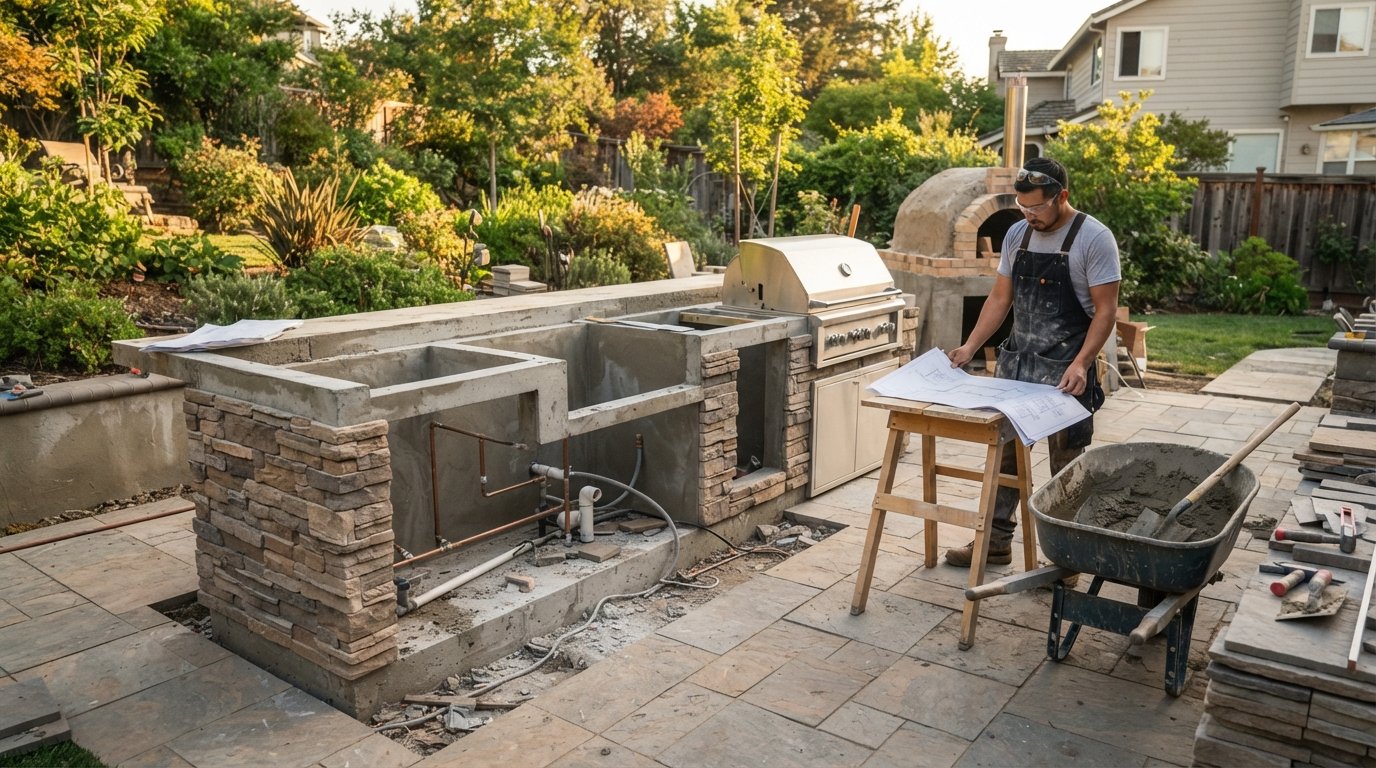
The first step in any successful renovation is defining the scope. An outdoor kitchen can be as simple as a portable grill on a patio or as complex as a fully plumbed structure with a roof. Your budget and available space will dictate the design. You must decide whether you want a built-in masonry island, a prefabricated modular unit, or a simple countertop extension. Each option has different cost implications regarding materials and labor.
Layout is another critical factor. You need to think about the "work triangle" (the distance between the grill, the prep area, and the refrigerator) to ensure efficiency. If you plan to host large gatherings, you may need to expand the counter space. Conversely, if you are an avid baker, you might prioritize a wood-fired oven. These decisions affect the outdoor kitchen construction cost and planning basics significantly, as moving utilities like gas and water over long distances increases labor fees.
When selecting materials, durability is key. Outdoor environments expose structures to moisture, UV rays, and temperature fluctuations. Common materials include stone veneer, brick, concrete, and stainless steel. While natural stone offers the highest aesthetic value, it also commands the highest price. For those looking to manage costs, pressure-treated lumber with a stone top can be a budget-friendly alternative, though it requires more maintenance. If you are still deciding on the specific storage components, reviewing a guide on outdoor kitchen cabinets can help you choose between stainless steel, polymer, and wood options that fit your climate.
Breaking Down the Costs: Materials and Labor
The total cost of an outdoor kitchen is typically divided into materials, appliances, and labor. Appliances often consume the largest portion of the budget. A high-end built-in grill can cost several thousand dollars, while a basic model is much less. Similarly, the choice between a bar fridge and a full-size refrigerator impacts the bottom line. Labor costs vary by region and the complexity of the build. Masonry work, in particular, is labor-intensive and requires skilled tradespeople.
To help you visualize where your money is going, consider these typical expense categories:
- Appliances: Grills, side burners, refrigerators, and ice makers.
- Hardscaping: Countertops, stone veneer, brick, and concrete for the base.
- Utilities: Running gas, water, and electrical lines to the site.
- Structures: Pergolas, pavilions, or roofing for shade and weather protection.
Expect to pay a premium for natural stone countertops like granite or quartzite, which can withstand the elements better than laminate. The base structure, whether built from cinder block or metal framing, also dictates the price. Cinder block with stone veneer is the most durable and expensive option, while metal framing with cement board is a lighter, more affordable alternative. Always factor in the cost of permits, which can add several hundred dollars to the project total. These are the core components that define the outdoor kitchen construction cost and planning basics for any homeowner.
Planning Utilities and Infrastructure
Infrastructure is the invisible backbone of your outdoor kitchen. Running gas lines is often the most expensive utility task. If you are using natural gas, a licensed plumber must tap into your home's main line. This requires trenching and permits. Propane is a common alternative for areas without natural gas access, but it requires a tank and regular refills. Electrical work is necessary for lighting, refrigerators, and rotisserie motors. You will need GFCI outlets to comply with safety codes.
Water and drainage are often overlooked. If you include a sink, you need a water supply line and a drain. In cold climates, you must install a shut-off valve and blow out the lines before winter to prevent freezing and bursting. Planning these elements early prevents costly retrofits later. It is wise to consult with a professional to ensure your infrastructure can handle the load. If you are comparing service providers, platforms like FreeQuotes.Contractors can connect you with local experts who specialize in utility installation for outdoor living spaces.
The placement of utilities also affects the layout. You do not want your prep sink far from the grill, nor do you want electrical cords crossing walkways. Proper planning ensures that your kitchen is not only beautiful but also functional and safe. Failure to plan for adequate ventilation can also lead to smoke accumulation, especially if you build a roof over the grill area.
Comparing Outdoor Kitchen Construction Costs by Tier
Costs for outdoor kitchens fall into three broad categories: basic, mid-range, and high-end. Understanding these tiers helps you set a realistic budget. A basic setup might involve a simple grill island with a countertop and a small fridge. This is often a DIY-friendly project or a small job for a handyman. A mid-range kitchen adds more counter space, a sink, and better appliances. A high-end kitchen is a fully custom structure with premium stone, a roof, and professional-grade appliances.
Here is a breakdown of what you might expect to pay for different levels of construction:
- Basic (DIY or Prefab): Involves a modular island and a standard grill. Costs are primarily materials.
- Mid-Range (Custom Masonry): Includes a built-in grill, side burner, fridge, and stone veneer. Requires professional labor.
- High-End (Full Pavilion): Features a roof, fireplace, pizza oven, and high-end appliances. Involves extensive permitting and engineering.
These figures are general guidelines. Regional pricing varies significantly based on local labor rates and material availability. For example, building costs in urban areas are typically higher than in rural regions. Always obtain multiple quotes to understand the specific outdoor kitchen construction cost and planning basics for your location. Be wary of extremely low bids, as they often indicate cut corners or unlicensed workers.
Selecting the Right Contractor for the Job
Choosing a qualified contractor is the most important decision you will make. An outdoor kitchen combines multiple trades: masonry, plumbing, electrical, and gas fitting. You may need a general contractor who can manage subcontractors or a specialized outdoor living builder. Verify that the contractor holds the necessary licenses for gas and electrical work. Ask for proof of insurance to protect yourself from liability in case of accidents on your property.
When vetting contractors, ask for references from projects similar to yours. Look at photos of their past work to assess the quality of their masonry and cabinetry. A good contractor will be transparent about the timeline and potential delays. They should also help you navigate the permit process. Avoid contractors who demand large upfront payments or refuse to provide a written contract. A detailed contract should outline the scope of work, payment schedule, and warranty terms.
Communication is key throughout the project. You should have a clear point of contact and regular updates. If issues arise, a professional contractor will address them promptly. Remember that the lowest bid is not always the best value. Quality craftsmanship ensures your outdoor kitchen lasts for years, making the investment worthwhile. By following these outdoor kitchen construction cost and planning basics, you can confidently navigate the construction process and create a space that enhances your home's value and your lifestyle.
Finally, consider the long-term maintenance costs. Stone and stainless steel are durable but require occasional sealing and cleaning. A roof structure can protect your investment from the elements, extending the life of your appliances and cabinetry. Planning for these future expenses ensures that your outdoor kitchen remains a functional and beautiful part of your home for decades.