
Gutter Guard Cost: Are They Worth It for Your Home?
Gutter guard cost and whether they are worth it explained with real 2026 pricing. Call 8333658755 for free quotes and expert help.

By Justin Blake
Learn more about Gutter Installation or Replacement for guides, costs, and what to expect.
Compare Gutter Installation or Replacement Pros Near You

Enter your ZIP code to compare top-rated local professionals and request free quotes.
Your gutters do a simple but critical job: they channel thousands of gallons of rainwater away from your roof, siding, foundation, and landscaping every year. When they clog, that same water backs up, rots fascia boards, erodes soil, and can even seep into basements. Gutter guards promise to end the endless cycle of climbing ladders and scooping out soggy leaves. But the gutter guard cost and whether they are worth it is a question every homeowner should answer with real numbers, not sales pitches. This guide breaks down what you will actually pay, how to judge the return on your investment, and when a guard system makes sense for your property.
What Gutter Guards Actually Do and What They Cost
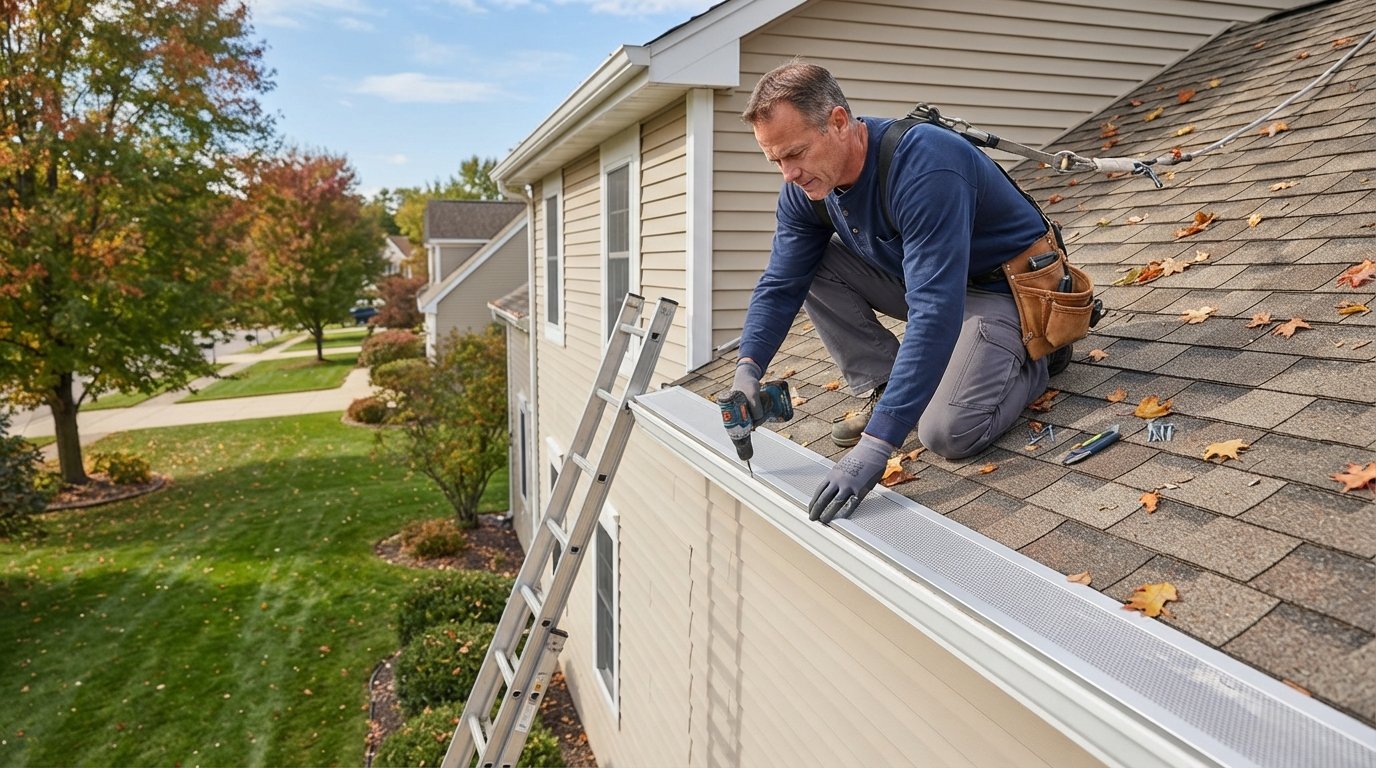
Gutter guards, also called gutter covers or leaf guards, are screens, mesh panels, foam inserts, or surface-tension covers that sit over or inside your gutters. Their job is to let water in while keeping out leaves, pine needles, shingle grit, and other debris. No system is completely maintenance-free, but a good guard can cut cleaning frequency from several times a year to once every one to three years, depending on your tree cover and climate.
Pricing depends on the material, the profile of your existing gutters, the length of your roofline, and whether installation requires new hangers or fascia repair. Most homeowners pay between $1,000 and $3,500 for a typical single-family home, with premium micro-mesh systems on larger or steeper roofs pushing higher.
- Plastic or vinyl snap-in guards: $0.50 to $1.50 per linear foot, plus installation. Best for short-term, low-budget coverage.
- Aluminum mesh screens: $1.50 to $4.00 per linear foot. A solid mid-range option for most homes.
- Stainless steel micro-mesh: $3.00 to $8.00 per linear foot. The most durable and effective against small debris.
- Foam or brush inserts: $1.00 to $3.00 per linear foot. Cheap and easy to install, but they degrade and can trap moisture.
- Reverse-curve or surface-tension covers: $4.00 to $10.00 per linear foot. Good for heavy leaf drop but can overshoot in intense rain.
Labor typically adds $1.00 to $3.00 per linear foot, and removal of old guards or gutter repair adds more. A 200-foot roofline, which is common on a 2,000-square-foot home, can therefore land anywhere from $500 for a basic DIY-friendly plastic product to well over $2,000 for a professionally installed stainless micro-mesh system.
Factors That Move the Gutter Guard Cost Up or Down
Two homes on the same street can receive quotes that differ by a thousand dollars, and the gap usually comes down to a handful of variables. Understanding them helps you compare bids fairly instead of assuming the cheapest number is the best deal.
Roofline length is the biggest driver. Contractors price guards by the linear foot, so a sprawling ranch with 250 feet of gutter will cost roughly twice as much as a compact home with 120 feet. Roof pitch and height matter too. Two-story homes, steep pitches, and complex rooflines with valleys and dormers slow down installation and often require fall-protection equipment, which raises labor rates.
Material choice is the second major factor. Foam and brush inserts are inexpensive but break down within a few seasons, so you may replace them repeatedly. Aluminum mesh is a reasonable middle ground. Stainless steel micro-mesh costs the most up front but typically lasts 15 to 25 years and handles pine needles and shingle grit far better than open screens. Finally, gutter condition matters: if your existing gutters are sagging, leaking, or undersized, a contractor may recommend replacement before adding guards, which changes the project scope entirely.
How to Decide Whether Gutter Guards Are Worth It
The honest answer is that gutter guards are worth it for some homes and a waste of money for others. The math comes down to how often you clean your gutters, what that cleaning costs, and what damage a clog could cause.
Start with your current maintenance burden. If you pay a professional $150 to $300 per cleaning two or three times a year, you are spending $300 to $900 annually. Over ten years, that is $3,000 to $9,000, which is more than the cost of a quality guard system. Add the risk of a fall from a ladder, and the value proposition strengthens considerably.
Next, consider your tree canopy. Homes surrounded by pine trees, maples, oaks, or sweetgums deal with constant debris and benefit the most from guards. Homes with few or no overhanging trees may only need cleaning once a year, in which case a guard system could take decades to pay for itself.
Finally, factor in the cost of water damage. Clogged gutters can lead to fascia rot, foundation cracks, basement flooding, and landscape erosion, repairs that routinely run $1,000 to $10,000 or more. For homeowners who have already dealt with one of these problems, guards are often an easy yes. For others, the decision is closer to a judgment call about convenience and risk tolerance.
A simple framework can help you decide:
- Calculate your annual gutter cleaning cost, including your own time if you do it yourself.
- Estimate how many more years you plan to stay in the home.
- Multiply annual cleaning cost by those years and compare it to your guard quote.
- Add a risk premium for ladder falls and potential water damage.
- Choose guards if the total benefit exceeds the installed price.
If you are weighing this against other maintenance needs, our guide on the average home repair project cost can help you see how gutter protection fits into your broader budget.
Professional Installation vs. DIY Gutter Guards
DIY gutter guard kits are widely available at home improvement stores, and for a single-story home with simple gutters, a handy homeowner can install snap-in screens in an afternoon. The appeal is obvious: you save on labor, which can be 30 to 50 percent of the total project cost.
However, DIY installation comes with real trade-offs. You need to work safely on a ladder or roof, which is the leading cause of serious home maintenance injuries. You also need to clean the gutters thoroughly before installing guards, ensure the guards sit flush without gaps, and handle transitions at corners, downspouts, and roof valleys. Mistakes in these areas lead to sagging, water overshoot, and premature failure.
Professional installers bring warranties, proper fasteners, and experience with local roof types. Many offer five- to twenty-year warranties on materials and workmanship. If your roof is steep, your home is two or more stories, or your gutters need repair, hiring a pro is usually the safer and more cost-effective choice over the long run. To compare vetted local contractors and request free quotes, you can use platforms like FreeQuotes.Contractors to gather multiple bids before committing.
Gutter Guard Cost by Material and Home Size
To make the numbers concrete, here is a realistic look at what homeowners pay in 2026 for common scenarios. These figures include materials and professional installation on a typical single-story or two-story home in good repair.
- Small home (100 to 150 linear feet), aluminum mesh: $400 to $900
- Average home (150 to 250 linear feet), aluminum mesh: $800 to $1,500
- Average home (150 to 250 linear feet), stainless micro-mesh: $1,200 to $2,500
- Large home (250 to 350 linear feet), stainless micro-mesh: $2,000 to $4,000
- Premium reverse-curve system, large home: $3,000 to $6,000
These ranges assume the existing gutters are in good shape. If you need new gutters, add $4 to $12 per linear foot for the gutter itself, plus disposal of old materials. Some contractors offer bundle discounts when you replace gutters and install guards at the same time, which is often the most economical path if your current gutters are nearing the end of their life.
Common Mistakes That Waste Money on Gutter Guards
Homeowners often regret a gutter guard purchase for reasons that have nothing to do with the product itself. Understanding these pitfalls helps you avoid them.
The most common mistake is buying cheap guards that fail within a year or two. Plastic and foam products crack, warp, and clog with fine debris, leaving you with the same problem plus the cost of removal. A second mistake is installing guards over gutters that are already damaged or undersized. Guards cannot fix a poorly pitched gutter or a roof that dumps too much water into a narrow channel.
A third issue is expecting zero maintenance. Even the best micro-mesh guards need occasional brushing or rinsing to clear pollen, shingle grit, and small seeds. Homeowners who never check their gutters after installation may discover a clog only when water starts pooling around the foundation. Finally, skipping multiple quotes is a costly error. Prices vary widely by contractor, and a single bid gives you no leverage. Getting at least three quotes is the single most reliable way to pay a fair price for quality work.
When to Skip Gutter Guards and What to Do Instead
Gutter guards are not the right solution for every home. If your property has no significant tree cover, if your gutters are easily accessible and you do not mind cleaning them once a year, or if your budget is tight and your gutters are functioning well, you may be better off saving the money.
In those cases, invest in preventive maintenance instead. Schedule an annual cleaning in late fall after leaves drop, check downspouts for blockages, and make sure water discharges at least four to six feet from your foundation. If you have recurring clogs in one section, a targeted repair or a small length of guard may solve the problem for far less than a whole-house system.
For homeowners who do choose guards, the best approach is to treat the purchase as a long-term investment. Choose a durable material, hire an experienced installer, and get multiple quotes before signing. With the right system and a fair price, gutter guards can eliminate a recurring chore, protect your home from water damage, and pay for themselves within a few years.