
Generator Installation Cost for Whole Home Backup in 2026
See what generator installation cost for whole home backup looks like in 2026, from unit prices to labor, fuel lines, and permits, so you can budget with confidence.

By Joshua Benson
Learn more about Generator Installation for guides, costs, and what to expect.
Compare Generator Installation Pros Near You

Enter your ZIP code to compare top-rated local professionals and request free quotes.
A whole home backup generator turns a blackout from a crisis into a minor inconvenience. Instead of hauling extension cords, draining a portable unit every few hours, or emptying a thawing freezer, you simply wait for the lights to come back on. That convenience comes with a real price tag, though, and the total depends on far more than the generator itself. Most homeowners are surprised to learn that the unit accounts for only about half of the final bill, with labor, fuel connections, electrical work, and permits absorbing the rest. Understanding how each piece fits together is the fastest way to budget accurately and avoid mid-project surprises.
This guide breaks down what whole home generator installation costs in 2026, what drives those numbers up or down, and how to plan a project that fits both your home and your wallet. Whether you are protecting a suburban house in a storm-prone state or a rural property where outages last for days, the same cost factors apply. By the end, you will know which questions to ask, which quotes to compare, and where the hidden expenses tend to hide.
What Whole Home Backup Actually Means
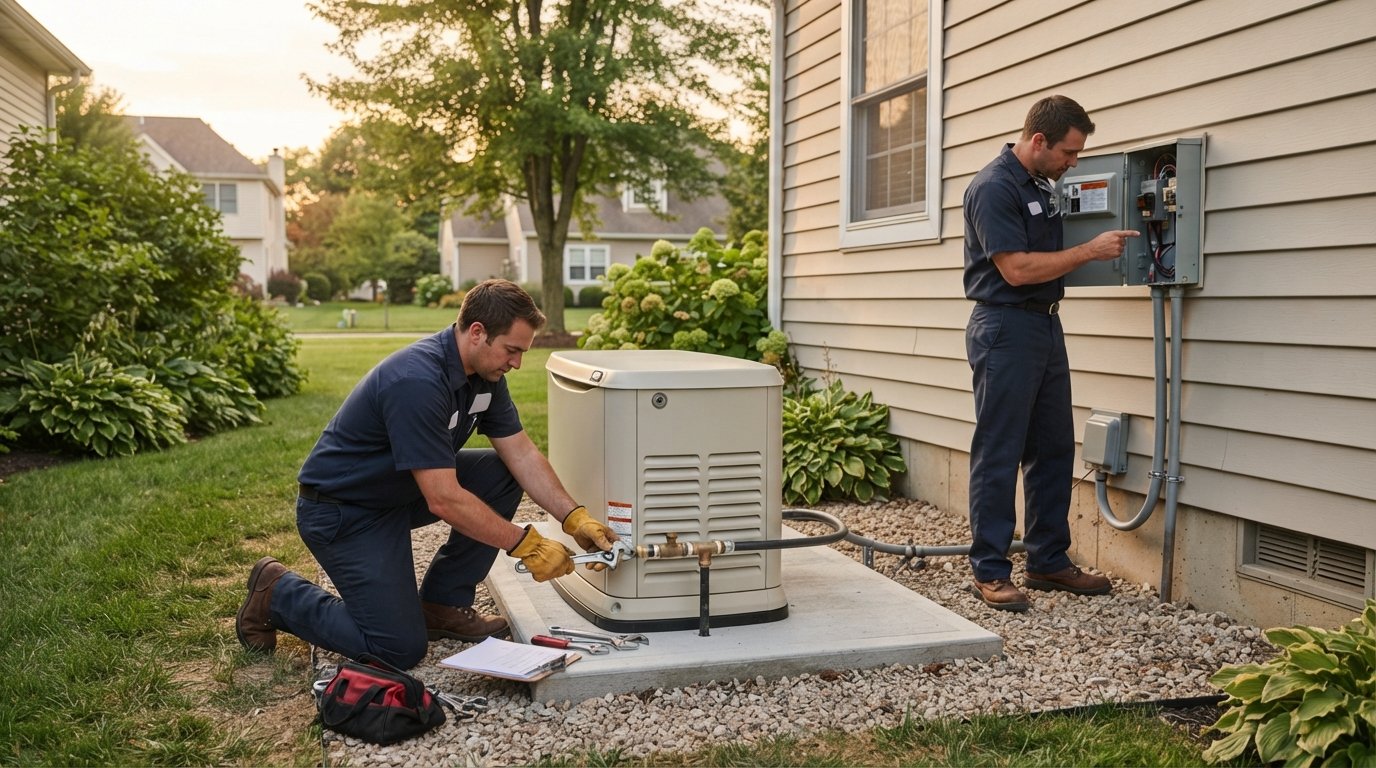
A whole home backup system is not the same as a portable generator that you wheel out during a storm. It is a permanently installed standby generator that sits outside on a concrete pad or composite base, connects to your home's electrical panel through a transfer switch, and runs on either natural gas or propane. When the utility power drops, the system senses the outage and starts automatically, usually within 10 to 30 seconds. When grid power returns, it shuts itself down.
The phrase "whole home" is slightly misleading, because not every system powers every appliance at once. There are two common configurations. A true whole home system is sized to run everything simultaneously, including central air conditioning, electric ranges, and well pumps. A managed whole home system uses load-shedding technology to run most circuits but temporarily pauses the heaviest loads (like the AC or EV charger) when demand spikes. The second option costs less because it allows a smaller generator, and for many families it delivers nearly identical comfort during an outage.
This distinction matters for budgeting because the generator size drives the price of almost everything else: the unit, the transfer switch, the fuel line, and the electrical labor. A 22 kW air-cooled unit and a 48 kW liquid-cooled unit are in completely different pricing universes, even though both may be marketed as whole home solutions.
Average Generator Installation Cost for Whole Home Backup
Nationally, most homeowners pay between $8,000 and $20,000 for a professionally installed whole home standby generator, with the bulk of projects landing in the $10,000 to $15,000 range. That figure includes the generator, the automatic transfer switch, a concrete pad, fuel connection, electrical wiring, permits, and labor. At the low end, you are typically looking at a smaller air-cooled unit with a short run to the gas meter and a straightforward electrical panel. At the high end, you are paying for a large liquid-cooled unit, a long fuel run, a complex panel setup, or a difficult installation site.
To make those numbers concrete, here is a rough breakdown of how a typical $12,000 project is distributed:
- Generator unit: $4,000 to $7,000
- Automatic transfer switch: $800 to $2,000
- Electrical labor and wiring: $1,500 to $3,500
- Fuel connection (gas or propane): $500 to $2,500
- Concrete pad, permits, and inspection fees: $500 to $1,500
Notice how quickly the non-generator costs add up. It is common for installation labor and materials to represent 40 to 50 percent of the total invoice. This is why comparing quotes on the generator model alone is a mistake. Two contractors may quote the same 24 kW unit, but one includes a 50-foot gas run and a full electrical permit while the other buries those costs in change orders.
For homeowners who want a second opinion on pricing before committing, using a project cost estimation tool can help you sanity-check bids against regional averages. It is a quick way to spot a quote that is dramatically out of line in either direction.
Key Factors That Drive the Final Price
No two installations cost the same, even for identical generators. The variables below are the ones that most often move a quote by thousands of dollars.
Generator size and type. Air-cooled generators (typically 10 kW to 26 kW) cost less upfront and are easier to install. Liquid-cooled units (usually 30 kW to 60 kW) cost significantly more but handle larger homes, run quieter, and last longer under heavy load. If your home has multiple AC units, an electric water heater, and a well pump, you may be pushed into liquid-cooled territory.
Fuel source and distance. Natural gas is usually the cheapest and most convenient option if your home already has a gas line. Propane requires an on-site tank, which adds $500 to $2,000 or more depending on size and whether you lease or buy. The distance from the fuel source to the generator matters too: every additional foot of gas line adds cost, and long runs may require larger-diameter pipe to maintain pressure.
Electrical complexity. A modern 200-amp panel with open breaker spaces is a straightforward install. An older 100-amp panel, a crowded service, or a need for a service upgrade can add $1,500 to $4,000. Homes with sub-panels, solar inverters, or backup battery systems require additional coordination and equipment.
Site conditions. A flat, accessible side yard near both the gas meter and the electrical panel is ideal. Sloped terrain, rocky soil, tight side yards, or a location far from both utilities will increase labor. Some HOAs also require screening, fencing, or specific placement, which adds cost.
Permits and inspections. Requirements vary widely by jurisdiction. Some municipalities charge a few hundred dollars for a combined electrical and gas permit, while others require separate permits and multiple inspections. In a few areas, a structural or zoning review is needed if the generator is near a property line.
Air-Cooled vs. Liquid-Cooled: Which Fits Your Budget
For most single-family homes under 3,000 square feet, an air-cooled generator in the 18 kW to 26 kW range is the sweet spot. These units typically cost $4,000 to $7,000 for the equipment and can be installed for a total project cost of $8,000 to $14,000. They run on natural gas or propane, are relatively quiet (around 60 to 65 decibels at close range), and handle the essentials plus a central AC with load management.
Liquid-cooled generators start around $10,000 for the unit alone and can push total installed costs past $25,000. They are built for continuous heavy loads, run at lower RPMs, last longer, and are often the right choice for homes over 4,000 square feet, homes with multiple HVAC systems, or properties where outages routinely last several days. If your budget is tight but your power needs are large, a managed whole home approach with an air-cooled unit is usually the smarter compromise.
One more consideration: maintenance. Air-cooled units generally need an oil change and inspection once a year, while liquid-cooled units may need more frequent service. Neither cost is huge, but it is worth factoring $150 to $400 per year into your long-term ownership budget.
How to Get Accurate Quotes and Avoid Surprises
The single best way to control costs is to get multiple itemized quotes from licensed electricians who regularly install standby generators. A good quote will separate the equipment, transfer switch, fuel connection, electrical labor, permits, and any site work. If a quote is a single lump sum with no breakdown, ask for details before signing.
When you request quotes, be ready to share a few key details: the size of your electrical panel, whether you have natural gas or propane, the approximate distance from the fuel source to the proposed generator location, and what appliances you want to run during an outage. Contractors who ask these questions upfront tend to deliver more accurate bids. If you are still in the early planning stage and want to compare local professionals, you can request free quotes from vetted contractors to see how pricing varies in your area.
Here is a practical sequence for comparing bids:
- Confirm the contractor holds a current electrical license and insurance.
- Ask whether the quote includes the automatic transfer switch, pad, and permit fees.
- Verify the generator size is based on a real load calculation, not a guess.
- Check the warranty terms for both the equipment and the installation labor.
- Ask for at least two local references from installations completed in the past year.
Following those steps will not eliminate every surprise, but it will catch the most common ones: missing permits, undersized gas lines, and transfer switches that cannot handle the load. It also gives you a fair basis for negotiating if one bid is significantly higher than the others.
Is a Whole Home Generator Worth the Investment?
Whether the cost is justified depends on how often you lose power and what those outages cost you. In hurricane, ice storm, and wildfire regions, a standby generator can protect food, prevent frozen pipes, keep medical equipment running, and let you stay in your home instead of evacuating. For some homeowners, that reliability is worth every dollar. For others, a smaller essential-circuits system or a portable generator with a manual transfer switch may be enough.
It also helps to think about resale. A permanently installed standby generator is a visible, functional home improvement that many buyers view favorably, especially in areas with a history of extended outages. It will not return its full cost at sale, but it can be a meaningful differentiator in a competitive market.
Finally, remember that the generator installation cost for whole home backup is not just a purchase, it is an insurance policy against the inconvenience and expense of prolonged power loss. Budget for the project you actually need, get itemized quotes from qualified local installers, and confirm every included cost in writing. Do that, and you will end up with a system that keeps your home comfortable, safe, and running when the grid goes down.