
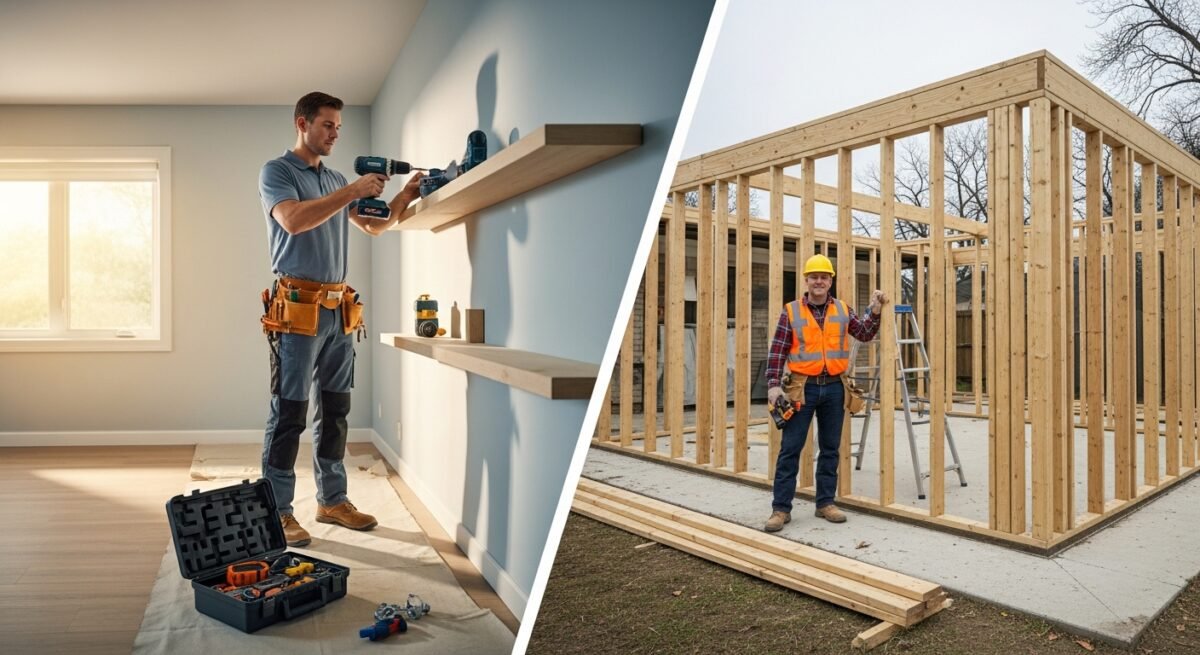
General Contractor vs Handyman: Choosing the Right Pro for Your Project
Not sure whether to call a handyman or a general contractor? Our clear guide explains the key differences, helping you choose the right pro for your home project and budget.

By Eric Andrew
Learn more about Exterior Painting for guides, costs, and what to expect.
Compare Exterior Painting Pros Near You

Enter your ZIP code to compare top-rated local professionals and request free quotes.
You have a home project in mind, but you’re stuck on a crucial first step: who do you call? Is this a job for a handyman or a general contractor? Making the wrong choice can lead to delays, unexpected costs, and even safety issues. Understanding the key differences between these two professionals is the most important decision you’ll make for your home’s health and your peace of mind.
Call 📞833-365-8755 or visit Find Your Pro for a clear, no-obligation assessment to connect with the right pro for your project.
A Simple Breakdown of General Contractor vs Handyman
At its core, the difference comes down to the scope, complexity, and legal requirements of the work. A handyman is your go-to expert for smaller, individual tasks and repairs. Think of them as a skilled multitool,perfect for a long list of odd jobs that don’t require pulling permits or specialized trade licenses.
A general contractor (GC) is a project manager and licensed coordinator for larger, more involved projects. They oversee the entire process from planning to completion, pulling together teams of specialized subcontractors (like electricians and plumbers), securing permits, and ensuring the work meets all building codes. Your choice fundamentally shapes how your project is managed, who is liable, and the final outcome.
Defining Their Core Roles
A handyman typically operates as a sole proprietor or with a small helper, tackling jobs they can personally complete. A general contractor runs a business that manages other businesses, acting as the single point of responsibility for a complex renovation or build.
Why It Matters for Homeowners
Choosing correctly protects your investment and your home. Hiring a handyman for a job that needs a general contractor might seem cheaper upfront, but it can be a costly mistake. If work is done without required permits, you could face fines, have trouble selling your home, or your insurance might not cover unpermitted work. More importantly, improper electrical or structural work can create serious safety hazards.
On the flip side, calling a GC for a simple repair is often overkill and more expensive. You’re paying for a level of project management and overhead that a small job doesn’t require. Knowing the distinction helps you budget accurately, set realistic timelines, and ensure the professional you hire has the right skills, insurance, and licenses for the task at hand. It’s about matching the tool to the job.
Finding a trusted general contractor near you is essential for major work, while a reliable handyman is a homeowner’s best friend for maintenance. Let’s connect you with the right pro today.
Common Issues and Their Causes
The most frequent problem homeowners face is scope creep,when a small project uncovers a larger issue. You might call a handyman to fix a leak under a sink, and they discover outdated plumbing that needs a full re-pipe, which is beyond their typical scope. Without a clear plan, this can stall projects and create confusion.
Another common issue is the permit puzzle. Many homeowners are unaware of local building codes. Jobs like moving a wall, adding an electrical circuit, or replacing a roof usually require permits. A handyman often cannot pull these permits, leaving you with unpermitted work. The root cause is usually a lack of initial project assessment by a qualified professional who can see the big picture.
- Unclear Project Scope: Not fully defining all tasks leads to mismatched service providers.
- Ignoring Permit Requirements: Assuming small updates don’t need official approval.
- Underestimating Specialized Skills: Thinking one person can expertly handle plumbing, electrical, and carpentry on a large scale.
- Budget Misalignment: Expecting handyman rates for general contractor-level work.
How Professionals Fix the Problem
A qualified professional starts with a thorough consultation. For a handyman, this means listening to your list of tasks, assessing each one, and confirming they have the tools and expertise to complete them efficiently and to a high standard. They provide a clear estimate for the labor and materials for those defined tasks.
A general contractor follows a more comprehensive process. They begin with a detailed project evaluation, often creating plans or collaborating with designers. They identify all necessary trades, secure building permits from your local authority, and schedule each subcontractor in the correct sequence. They manage the budget, timeline, and quality control, serving as your single point of contact. A licensed general contractor is your key to a safe home project, ensuring every phase meets code.
- Assessment & Planning: Evaluating the full extent of the work and creating a roadmap.
- Permitting & Logistics: Handling legal paperwork and material delivery schedules.
- Execution & Management: Performing the work (handyman) or coordinating specialized crews (GC).
- Inspection & Final Walkthrough: Ensuring everything is completed correctly and you are satisfied.
Don’t navigate this complex process alone. Our network of vetted professionals is ready to guide you.
Signs You Should Not Ignore
Your project itself will give you the clearest signals. If you’re simply maintaining your home, a handyman is likely perfect. But if you’re altering your home’s footprint, systems, or structure, it’s time for a GC. Pay close attention to the nature of the work involved.
Listen to the professionals you consult. If a handyman you call for a quote says, “This is bigger than what I do,” heed that advice. They are being honest and protecting you. Similarly, if multiple tasks are interconnected,like a bathroom remodel involving demolition, plumbing, electrical, tiling, and carpentry,that is a textbook scenario for a general contractor.
- Structural Changes: Removing walls, adding rooms, or altering load-bearing elements.
- System Overhauls: Re-wiring, re-plumbing, or replacing the HVAC system.
- Permit Requirements: Any job your local building department says needs a permit.
- Multiple Trade Specialties: Projects requiring electricians, plumbers, and carpenters in sequence.
- Major Roofing or Foundation Work: These are critical, high-stakes projects with long-term implications.
Cost Factors and What Affects Pricing
Handyman services are typically priced by the hour or by the project for a defined task. Rates vary by region, experience, and the job’s complexity. You’re primarily paying for their time, skill, and materials. It’s straightforward and ideal for budget-conscious repairs.
Call 📞833-365-8755 or visit Find Your Pro for a clear, no-obligation assessment to connect with the right pro for your project.
General contractor costs are more comprehensive. Their quote includes project management, overhead, profit, and the costs of all subcontractors and materials. It’s a full package price. While the hourly rate or percentage fee of a GC may be higher, they often secure better material prices through trade discounts. The value lies in their coordination, expertise, and assumption of risk and liability for the entire project. Your guide to hiring a local general contractor should always include a detailed, line-item estimate to understand what you’re paying for.
How To Choose the Right Professional or Service
Start by writing a detailed description of your project. Be as specific as possible. Then, research professionals whose advertised services match that scope. Check for essential credentials: handymen should have general liability insurance, while general contractors must hold a valid state license and likely additional bonding.
Always ask for references and look at online reviews for recent, similar projects. Get at least three written, detailed estimates. The lowest price isn’t always the best value,look for clear communication, professionalism, and a detailed scope of work. Trust your instincts; you want someone you feel comfortable having in your home.
- Verify licenses, insurance, and bonding.
- Ask for references from projects similar to yours.
- Review detailed, written contracts before any work begins.
- Ensure they pull required permits (for GC work).
- Choose someone who communicates clearly and listens to your vision.
Long-Term Benefits for Your Home
Hiring the right pro the first time pays dividends for years. Properly permitted and code-compliant work ensures your home is safer, more energy-efficient, and has a higher resale value. It prevents the nightmare of failed home inspections when you sell. Quality craftsmanship also means repairs and renovations last longer, saving you money on repeat fixes.
Beyond the physical structure, the right choice gives you profound peace of mind. You can trust that the electrical system won’t fail, the new bathroom won’t leak, and the addition is structurally sound. Your home is your biggest investment; protecting it with the correct professional service is the smartest maintenance decision you can make.
Frequently Asked Questions
Can a handyman do plumbing or electrical work?
It depends on local laws and the job’s complexity. A handyman can often replace a faucet or light fixture (like-for-like). However, installing new pipes, water heaters, or circuits usually requires a licensed plumber or electrician, which a general contractor would coordinate.
Do I need a permit for a bathroom remodel?
Most likely, yes. If you are moving plumbing fixtures, adding or moving electrical outlets, or altering walls, permits are typically required. A general contractor will manage this process. A simple cosmetic update (painting, replacing a vanity without moving plumbing) may not.
How much does a general contractor charge?
GCs often charge a percentage of the total project cost (typically 10-20%) or a fixed project fee. This covers their management, overhead, and profit. Always get a detailed, written estimate that breaks down costs for materials, labor, and their management fee.
What questions should I ask before hiring?
Ask for their license number and proof of insurance, how long they’ve been in business, who will be on-site daily, the projected timeline, payment schedule, and how they handle unexpected issues or changes. Get everything in writing.
Is it cheaper to hire individual tradespeople myself?
It can seem cheaper but often isn’t. You act as the project manager, responsible for scheduling, mistakes, and delays. Without trade discounts, material costs may be higher. A GC’s expertise often saves money and stress by preventing costly errors.
What is the biggest risk of hiring a handyman for a big job?
The biggest risks are performing work without required permits (leading to legal and financial headaches) and attempting complex systems work without proper licensing, which can create safety hazards and void home insurance policies.
When is a handyman the perfect choice?
A handyman is ideal for a punch list of small repairs: fixing a door, patching drywall, assembling furniture, installing shelves, replacing trim, or tackling minor plumbing leaks. They are efficient and cost-effective for discrete tasks.
How do I verify a general contractor’s license?
Contact your state’s licensing board for contractors. Most have an online database where you can search by name or license number to check status and see if there are any complaints or disciplinary actions.
Choosing between a general contractor and a handyman doesn’t have to be confusing. By understanding the scope of your project and the distinct roles of these professionals, you can make a confident decision that safeguards your home, your budget, and your timeline. The right expert is out there to bring your vision to life with quality and care.
Call 📞833-365-8755 or visit Find Your Pro for a clear, no-obligation assessment to connect with the right pro for your project.
Learn more about Exterior Painting for guides, costs, and what to expect.
Compare Exterior Painting Pros Near You
Enter your ZIP code to compare top-rated local professionals and request free quotes.