
Fiber Cement Siding Installation Cost and Maintenance Guide
Fiber cement siding installation cost and maintenance explained: real per-square-foot pricing, repainting timelines, and tips to budget without surprises.

By Joshua Benson
Learn more about Siding Installation for guides, costs, and what to expect.
Compare Siding Installation Pros Near You

Enter your ZIP code to compare top-rated local professionals and request free quotes.
Fiber cement siding has quietly become one of the most requested exterior upgrades in North America, and for good reason. It mimics the look of painted wood without the rot, warping, and constant repainting that wood demands. But before you commit, you need a clear picture of what fiber cement siding installation cost and maintenance really involve over the life of your home. This guide breaks down the numbers, the labor, and the long-term care so you can budget with confidence and avoid surprises.
What Fiber Cement Siding Actually Is
Fiber cement siding is a composite material made from a blend of Portland cement, sand, cellulose fibers, and water. Manufacturers like James Hardie, Allura, and Nichiha press this mixture into planks, panels, and shingles that replicate wood, stucco, or masonry finishes. The result is a siding product that resists fire, insects, and moisture far better than vinyl or wood.
Because it is dense and dimensionally stable, fiber cement holds paint longer than most alternatives. It also carries strong warranties, often 30 years or more on the material. That durability is exactly why homeowners who plan to stay in their homes for a decade or longer gravitate toward it, even when the upfront price is higher than vinyl.
Fiber Cement Siding Installation Cost Breakdown
The national average for professional fiber cement siding installation runs between $6 and $13 per square foot, including materials and labor. For a typical 1,500 square foot exterior, that translates to roughly $9,000 to $19,500. Your actual number depends on the profile you choose, the complexity of your home, and your regional labor market.
Several factors push the price up or down. Two-story homes, dormers, gables, and intricate trim work all add labor hours. Removing existing siding, repairing sheathing, and dealing with rot or pest damage can add thousands. On the other hand, simple ranch-style homes with minimal corners and a single story tend to land near the low end of the range.
Here is a quick look at the main cost drivers you should expect in any estimate:
- Material grade: Pre-finished boards cost more upfront but save on painting labor.
- Home size and shape: More corners, windows, and stories mean more cuts and fasteners.
- Old siding removal: Tear-off and disposal typically add $1 to $3 per square foot.
- Trim and accessories: Corner boards, fascia, and soffit work can add 20 to 30 percent.
- Regional labor rates: Urban markets and coastal areas cost more than rural regions.
When you review bids, ask each contractor to separate material, labor, tear-off, and disposal line items. This makes it far easier to compare apples to apples. If you want a structured way to read those numbers, the guide on understanding your siding installation estimate walks through each line item and explains what a fair quote looks like.
Material Costs by Brand and Profile
Material alone usually runs $2 to $5 per square foot. Standard lap siding sits at the lower end, while shingle panels, board-and-batten, and pre-finished factory colors push toward the higher end. James Hardie products often command a premium because of their brand recognition and finish warranties, but comparable products from Allura and Nichiha can deliver similar performance for less.
Pre-finished siding is worth a serious look. It costs more per board but eliminates the need to paint immediately after installation. Factory finishes also tend to bond better and last longer than field-applied paint, which can save you money on maintenance in years three through ten.
Labor Costs and Installation Complexity
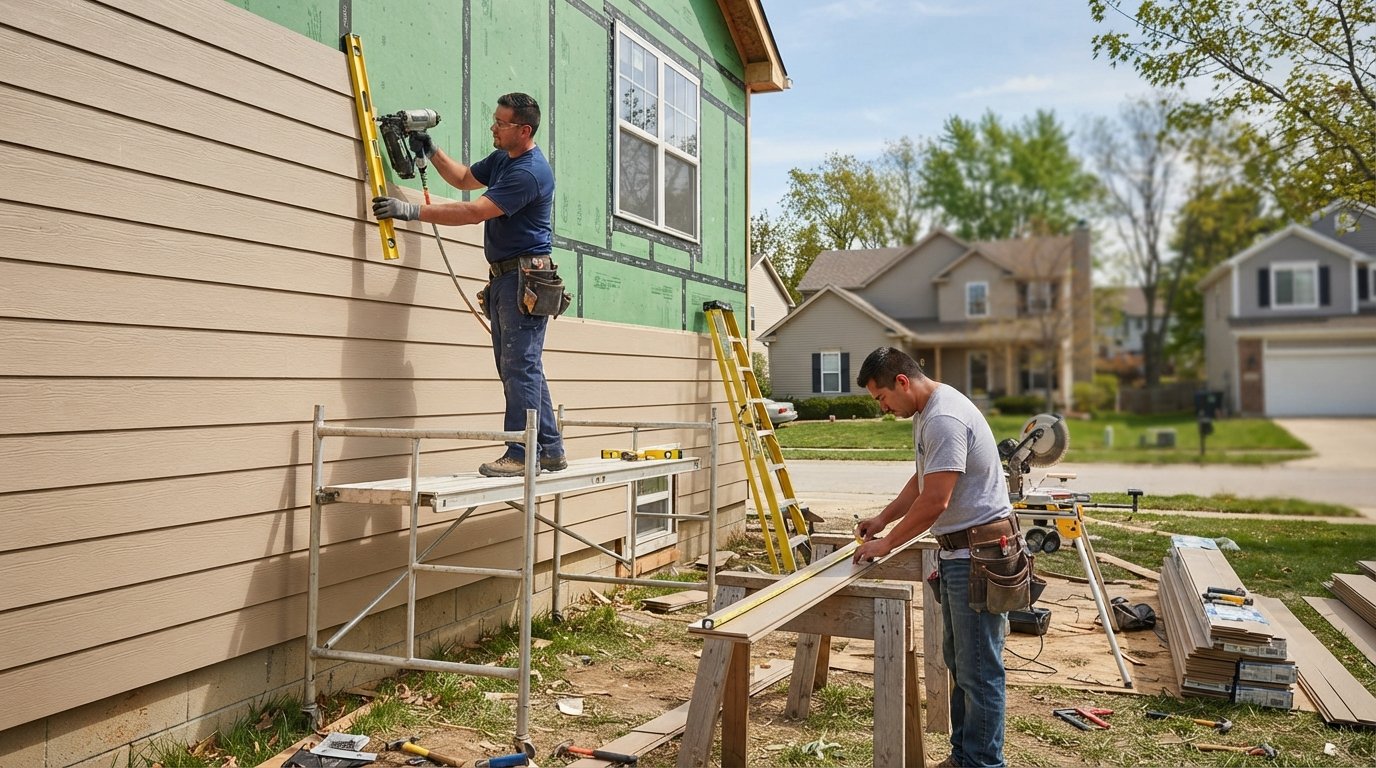
Labor typically accounts for 50 to 60 percent of the total project cost. Fiber cement is heavy, brittle before installation, and requires specific fastening techniques, so it is not a material most homeowners should install themselves. Contractors need to maintain a gap between boards, use corrosion-resistant fasteners, and follow manufacturer guidelines to keep the warranty valid.
Homes with complex architecture, such as turrets, steep rooflines, or extensive trim, can add 15 to 25 percent to labor. Scaffolding requirements, difficult access, and working around landscaping also drive up hours. Always confirm that your contractor carries workers compensation and liability insurance, because fiber cement installation is physically demanding and mistakes are expensive to fix.
Maintenance Costs and Long-Term Care
One of the biggest selling points of fiber cement is low maintenance, but low does not mean zero. You still need to clean it, inspect it, and repaint it periodically. The good news is that these tasks are infrequent and predictable, which makes budgeting straightforward.
Annual maintenance is minimal. A gentle wash with a garden hose and a soft brush removes most dirt, pollen, and mildew. Avoid pressure washing at high settings, because it can force water behind the boards and damage the finish. Inspect caulk lines around windows, doors, and corners once a year, and touch up any cracks before they let moisture in.
Repainting is the largest recurring cost. Factory-finished siding often lasts 10 to 15 years before it needs a recoat. Field-painted fiber cement typically needs repainting every 7 to 10 years. Professional painting for an average home runs $2,500 to $6,000, depending on size, height, and prep work.
Typical Maintenance Timeline
Understanding when each maintenance task comes due helps you plan your budget years in advance. The schedule below reflects typical conditions for a single-family home in a moderate climate:
- Annually: Wash siding, inspect caulk and seals, check for cracks or chips.
- Every 3 to 5 years: Re-caulk joints and penetrations as needed.
- Every 7 to 10 years: Repaint field-painted fiber cement.
- Every 10 to 15 years: Repaint factory-finished siding.
- As needed: Replace individual damaged boards, which is easier than repairing wood because damage rarely spreads.
Compared with wood siding, which may need painting every 3 to 5 years, fiber cement cuts long-term maintenance costs significantly. Compared with vinyl, it costs more upfront but holds up better against impact, heat, and pests. Over a 20-year horizon, the total cost of ownership for fiber cement often lands between wood and premium options like engineered cedar.
How to Budget and Compare Quotes
Start by setting a realistic budget range using the per-square-foot figures above, then add a 10 to 15 percent contingency for hidden damage. Older homes frequently have rotted sheathing, failed flashing, or pest issues behind the old siding, and those repairs must be addressed before new siding goes on.
Next, gather at least three written estimates. Each bid should specify the material brand, profile, thickness, finish type, fasteners, house wrap, trim details, and warranty terms. Ask whether the price includes tear-off and disposal, and whether permits are included. A bid that omits these details is not really comparable to one that includes them.
Check references and look at completed projects in person if possible. Ask how the contractor handles change orders and what the payment schedule looks like. A reasonable deposit is typically 10 to 30 percent, with the balance tied to milestones and final inspection. Never pay the full amount upfront.
If you want to streamline the process of finding vetted professionals, platforms such as FreeQuotes.Contractors connect homeowners with pre-screened local contractors and provide free, no-obligation quotes. That can save hours of phone calls and give you a clearer sense of fair market pricing in your area.
Common Mistakes to Avoid
The most common mistake is choosing the lowest bid without verifying what it includes. A cheap quote often skips house wrap, uses inferior fasteners, or leaves old siding in place, all of which can void warranties and shorten the life of your investment. Read the fine print and ask questions before signing.
Another frequent error is ignoring clearance requirements. Fiber cement must be kept above grade and properly flashed to prevent moisture wicking. If a contractor does not mention clearance or flashing, treat that as a red flag. Similarly, painting too soon after installation, before the material has fully acclimated, can cause premature peeling.
Finally, do not neglect the warranty registration process. Many manufacturers require registration within a certain window after installation. Your contractor should provide the paperwork, but it is ultimately your responsibility to submit it. Keep copies of all receipts, permits, and warranty documents in a safe place.
Is Fiber Cement Worth the Investment?
For most homeowners, yes. Fiber cement siding installation cost and maintenance together deliver a strong return over time. The material lasts decades, resists fire and pests, and boosts curb appeal. National remodeling data consistently shows fiber cement among the top siding options for cost recouped at resale, often in the 60 to 75 percent range.
If your priority is the lowest possible upfront cost and you plan to move within a few years, vinyl may be a better fit. But if you want a durable, low-maintenance exterior that holds its appearance for 20 years or more, fiber cement is hard to beat. Get multiple quotes, verify the details, and plan for periodic painting. Do that, and your siding will protect your home and your budget for a long time.