
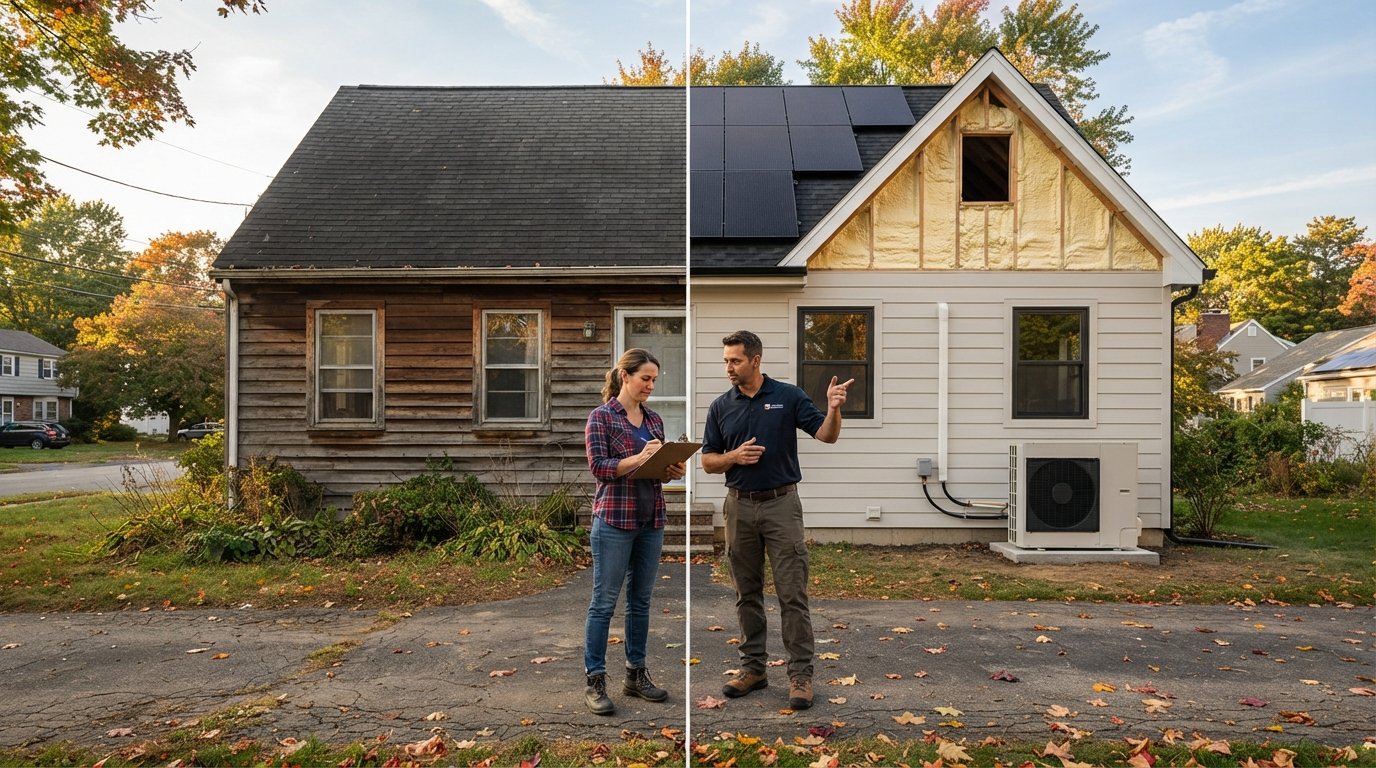
Eco Friendly Home Upgrades: True Cost and ROI
Eco friendly home upgrades true cost and ROI explained with real payback numbers, incentives, and the upgrades that actually pay off. Call 8333658755 for guidance.

By Jessica Reis
Learn more about Weatherization for guides, costs, and what to expect.
Compare Weatherization Pros Near You

Enter your ZIP code to compare top-rated local professionals and request free quotes.
Going green at home sounds like a win for the planet and your wallet, but the math is rarely as simple as a sales brochure suggests. A solar array that promises to wipe out your electric bill can carry a 15-year payback. Spray foam insulation that slashes heating costs might cost five figures before you feel a single dollar of savings. And a heat pump that earns rave reviews online could underperform in a drafty, poorly sealed house.
That gap between marketing claims and real-world returns is exactly where homeowners get burned. This guide breaks down the eco friendly home upgrades true cost and ROI picture with honest numbers, so you can decide which improvements actually pay you back and which ones are better framed as comfort or values purchases. Whether you are planning a single upgrade or a whole-house efficiency retrofit, understanding the true cost and realistic return on investment is the difference between a smart renovation and an expensive lesson.
Why Eco Upgrade ROI Is Harder to Calculate Than It Looks
Traditional remodeling ROI is fairly straightforward: you spend money, you get a measurable bump in resale value at appraisal time. Energy-efficiency upgrades work differently because they generate returns in two currencies at once. The first is monthly savings on utility bills, which accumulate slowly over years. The second is resale value, which depends heavily on your local market, the buyer pool, and whether appraisers in your area actually credit efficiency features.
There is also the rebate and tax credit layer. Federal incentives like the Energy Efficient Home Improvement Credit and the Residential Clean Energy Credit can cover a meaningful chunk of project costs, but they change with legislation and have caps, eligibility rules, and paperwork requirements. State and utility rebates stack on top in some regions and are completely absent in others. A $20,000 heat pump installation in one state might net out to $12,000 after incentives, while the identical project two states over nets out to $18,000.
Finally, there is the behavior factor. Efficiency upgrades only deliver their projected savings if the home is operated the way the model assumes. A smart thermostat set to extreme temperatures, a heat pump fighting leaky ductwork, or solar panels shaded by a new tree will all underperform their estimates. This is why any honest ROI conversation starts with a home energy audit, not a product catalog.
If you want a baseline for what typical projects cost before efficiency premiums are layered on, our guide to average home project cost estimates gives you a useful starting framework for budgeting.
Solar Panels: The Headline Upgrade With the Longest Payback
Rooftop solar is the upgrade most homeowners associate with going green, and it has the clearest financial model. A typical residential system runs between $15,000 and $30,000 before incentives, depending on system size, roof complexity, and local labor rates. After the 30 percent federal Residential Clean Energy Credit, most homeowners land somewhere between $10,500 and $21,000 out of pocket.
Annual savings depend almost entirely on your electricity rate and how much sun your roof gets. In high-rate states like California, Massachusetts, or Hawaii, a well-sized system can offset $1,500 to $2,500 per year in electricity costs. In low-rate states like Louisiana or Wyoming, that number can drop below $800. Payback periods therefore range from roughly 7 years in the best markets to 15 or even 20 years in weaker ones.
Resale value is the wild card. Studies have consistently found that homes with owned solar sell for a premium, often in the range of $2.50 to $4.00 per watt of installed capacity, but leased systems and power purchase agreements can actually complicate a sale because buyers must assume the contract. If you are financing solar, own the system outright if at all possible.
- Best ROI scenario: High electricity rates, south-facing roof, owned system, strong net metering policy.
- Worst ROI scenario: Low rates, shaded or north-facing roof, leased system, weak net metering.
- Hidden costs: Roof replacement before installation, electrical panel upgrades, monitoring equipment, inverter replacement around year 12 to 15.
One more reality check: if your roof is more than 10 years old, replace it before installing solar. Tearing off panels to redo a roof later can add thousands to your total cost.
Insulation and Air Sealing: The Quiet Winner
If solar is the flashy upgrade, insulation and air sealing are the unglamorous ones that quietly deliver the best returns. Attic insulation, wall insulation, rim joist sealing, and duct sealing together cost far less than most headline upgrades, and they reduce both heating and cooling loads immediately.
A typical attic insulation upgrade with air sealing runs $1,500 to $4,000 for an average home. Annual energy savings commonly land between $200 and $600 depending on climate and how leaky the house started. That is a payback period of roughly 4 to 10 years, and unlike solar, the savings do not depend on utility rate structures or net metering policy.
More importantly, insulation and air sealing make every other upgrade work better. A heat pump installed in a leaky house will struggle to keep up on cold nights. Solar panels sized for a leaky house need to be larger and more expensive. Duct sealing alone can improve HVAC efficiency by 15 to 30 percent in homes with badly leaking ducts, which is a huge multiplier on everything else you do.
This is the upgrade that energy auditors recommend first for a reason. It is low risk, high certainty, and it compounds the value of every other efficiency investment you make afterward.
Heat Pumps and HVAC Upgrades: Big Savings, Big Variables
Replacing a furnace and air conditioner with a modern heat pump is one of the most impactful eco upgrades available, and also one of the most variable in terms of ROI. A full heat pump installation with a compatible air handler runs $8,000 to $20,000 depending on system size, efficiency rating, and whether ductwork needs modification.
Federal tax credits cover up to $2,000 for qualifying heat pumps under the Energy Efficient Home Improvement Credit, and many utilities offer additional rebates of $500 to $3,000. After incentives, most homeowners land between $6,000 and $15,000 out of pocket.
Operating savings depend on what you are replacing. Swapping an old electric resistance furnace for a heat pump can cut heating costs by 40 to 60 percent. Swapping a mid-efficiency gas furnace in a mild climate might only save 10 to 20 percent. In very cold climates, cold-climate heat pumps work well but may need a backup system for the coldest weeks, which adds cost.
Resale value for HVAC upgrades is generally modest at appraisal time, but a modern, efficient system is a strong selling point in a competitive market, especially in regions where buyers are increasingly aware of efficiency ratings like SEER2 and HSPF2. The real return here is monthly cash flow, not resale premium.
Windows, Doors, and the Envelope: Where ROI Gets Complicated
Window replacement is often marketed as an energy upgrade, but the honest ROI story is more nuanced. A full-house window replacement with Energy Star rated double-pane units runs $8,000 to $25,000 depending on count, frame material, and glass package. Annual energy savings typically land between $100 and $400, which means the payback period on energy savings alone can stretch past 30 years.
That does not mean windows are a bad upgrade. It means the financial case rests on factors beyond energy savings: improved comfort, reduced outside noise, eliminated drafts, better UV protection for furnishings, and curb appeal. Window replacement also tends to return 60 to 70 percent of its cost at resale, which is competitive with many other remodeling projects.
Doors follow a similar pattern. A new energy-efficient entry door is a modest energy saver but a strong curb appeal and resale play. If your goal is strictly utility bill reduction, weatherstripping, caulking, and storm windows deliver far better ROI than full replacement.
The envelope matters as a system. Upgrading windows without addressing insulation and air sealing is like putting a new lid on a pot with a hole in the bottom. Sequence your projects so the cheap, high-impact envelope work happens first.
Water Heaters, Appliances, and Smaller Eco Wins
Not every eco upgrade needs to be a five-figure project. Heat pump water heaters, which are two to three times more efficient than standard electric resistance models, cost $1,200 to $3,500 installed and can save $300 to $500 per year in a household with high hot water use. Federal tax credits cover up to $2,000 for qualifying models, pushing payback periods into the 3 to 6 year range in many cases.
Energy Star appliances follow a similar logic. A modern efficient refrigerator, dishwasher, or washing machine uses a fraction of the electricity of a 15-year-old unit, and the upgrade often happens anyway when the old appliance fails. The incremental cost of choosing the efficient model is usually a few hundred dollars, and the savings accumulate quietly for a decade or more.
Smart thermostats, LED lighting retrofits, low-flow fixtures, and programmable irrigation controllers round out the small-wins category. Individually, each saves modest amounts. Together, they can shave 10 to 20 percent off a typical household utility bill with total upfront costs under $1,000.
If you are planning a broader renovation and want to fold efficiency upgrades into a larger project, getting multiple contractor bids is essential. You can request free, no-obligation quotes from vetted local professionals through FreeQuotes.Contractors and compare pricing across installers before committing.
A Practical Framework for Choosing Your Upgrades
Rather than chasing the upgrade with the biggest marketing budget, work through a simple decision sequence. Start with the cheapest improvements that reduce demand, then move to the systems that supply energy, then finish with generation and storage.
- Audit first. A professional home energy audit costs $200 to $500 and identifies exactly where your home loses energy. Many utilities offer free or subsidized audits.
- Seal and insulate. Air sealing and insulation deliver the fastest payback and improve the performance of everything installed afterward.
- Upgrade systems. Heat pumps, heat pump water heaters, and efficient appliances replace aging equipment with lower operating costs.
- Address the envelope. Windows and doors are usually comfort and resale plays, not energy savings plays, so treat them accordingly.
- Generate and store. Solar and battery storage come last, sized for the reduced load your other upgrades have already created.
This sequence matters because it changes the size and cost of every downstream decision. A house that has been air sealed and insulated needs a smaller heat pump and a smaller solar array, which can cut total project cost by thousands of dollars while improving comfort at the same time.
Track your actual utility bills before and after each upgrade. Real data beats marketing estimates every time, and it will tell you which upgrades are actually paying off in your specific home and climate.
Incentives, Financing, and the Fine Print
Incentives are a major lever on eco upgrade ROI, but they come with conditions. Federal tax credits require qualifying equipment efficiency ratings, installation by a licensed contractor in many cases, and documentation you will need to keep for years. State and utility rebates often have limited annual funding, first-come-first-served rules, and specific contractor network requirements.
Financing options range from traditional home equity loans and HELOCs to green mortgages and property assessed clean energy (PACE) programs, which let you repay efficiency improvements through your property tax bill. Each has tradeoffs in interest rates, tax treatment, and how the loan interacts with a future home sale. PACE liens in particular can complicate refinancing and sales, so read the terms carefully.
Be cautious with any contractor who promises a specific payback period without seeing your utility bills, your home's construction, and your local rates. Real ROI depends on your specific situation, and any estimate is a projection, not a guarantee. Get at least three quotes for any major upgrade, verify licensing and insurance, and ask for references from customers who have owned their systems for at least two years.
The homeowners who get the best returns from eco upgrades are the ones who treat the process like an investment portfolio: diversify across cheap wins and strategic big bets, measure results, and adjust as real data comes in. Done thoughtfully, a green home is not just better for the environment, it is genuinely better for your bottom line.