
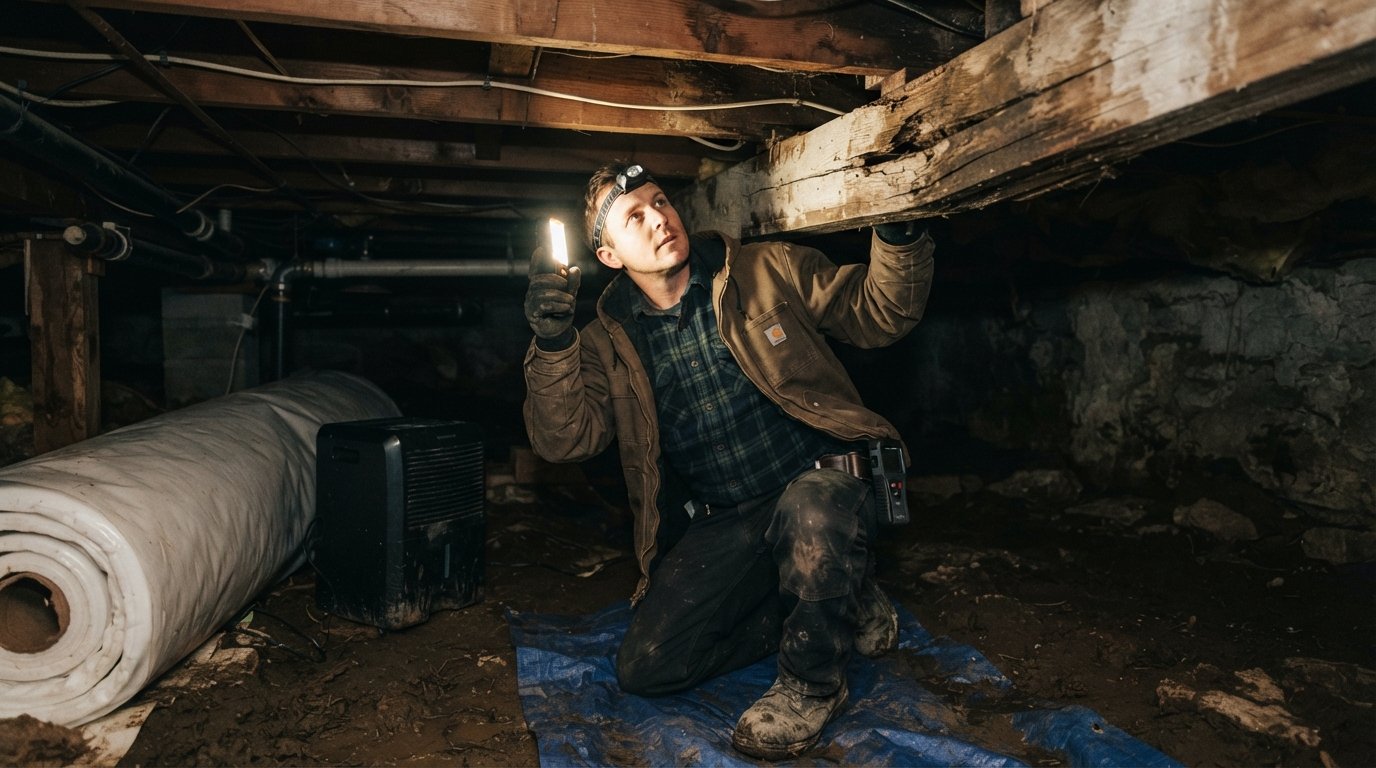
Crawl Space Repair Costs and How to Plan Yours
Learn the essential steps to diagnose, plan, and budget for crawl space repair to protect your home's foundation and air quality.

By Peter Hubert
Learn more about Home Waterproofing for guides, costs, and what to expect.
Compare Home Waterproofing Pros Near You

Enter your ZIP code to compare top-rated local professionals and request free quotes.
That musty smell in your living room, the unexplained spike in your energy bill, or the creaking floorboards that seem to sag just a little more each year. These are the quiet warnings that your crawl space is in trouble. For many homeowners, this neglected void beneath their feet becomes a source of costly problems, from structural damage to poor indoor air quality. Understanding what crawl space repair involves, what it costs, and how to approach it can save you thousands of dollars and protect the very foundation of your home. This guide will walk you through the essential steps to diagnose issues, plan a repair, and work with a professional to restore your home's stability and health.
Think of your crawl space as the lungs of your house. It regulates moisture, supports your floors, and houses critical systems like plumbing and HVAC ducts. When it fails, the effects ripple throughout your entire living space. Ignoring the problem is never a solution, as minor issues can quickly escalate into major structural failures. The good news is that with the right information and a solid plan, you can address these challenges effectively and avoid surprise bills down the road.
Why Crawl Space Repair Matters More Than You Think
The health of your crawl space directly impacts the structural integrity of your home and the health of its occupants. A compromised crawl space can lead to a host of problems that extend far beyond the dark, damp area itself. Wood rot, for instance, can silently eat away at floor joists and support beams, compromising the very bones of your house. This damage is often hidden from view until it becomes a serious and expensive issue, affecting the resale value of your property.
Beyond structural concerns, the air in your crawl space rises into your living areas through a phenomenon known as the stack effect. This means that mold spores, mildew, and even radon gas can be pulled from the crawl space and circulated throughout your home. For individuals with allergies, asthma, or other respiratory conditions, this can lead to a noticeable decline in indoor air quality and overall well-being. Therefore, crawl space repair is not just a matter of home maintenance; it is a matter of protecting your investment and your family's health.
Finally, there is the issue of energy efficiency. A poorly insulated and unsealed crawl space can account for a significant portion of your home's energy loss. Cold air can seep in through the floors during winter, and humid air can infiltrate during summer, causing your HVAC system to work harder and your energy bills to climb. By addressing these issues through proper crawl space repair, you can create a more comfortable and energy-efficient home.
Common Crawl Space Problems and Their Solutions
To effectively plan a repair, you must first understand the specific issues affecting your crawl space. While every home is unique, most crawl space problems fall into a few common categories. Identifying the root cause is the first step toward a permanent solution, rather than a temporary fix.
Moisture and Water Intrusion
Moisture is the enemy of any crawl space. It can come from groundwater seepage, leaky pipes, or simply high humidity in the surrounding soil. This excess moisture creates the perfect breeding ground for mold, mildew, and wood-destroying insects like termites. The solution often involves a combination of strategies, starting with improving drainage around your foundation. This might include installing or repairing gutters and downspouts to direct water away from the house. Inside the crawl space, a vapor barrier is often laid over the soil to prevent ground moisture from evaporating into the space. This is a critical component of any moisture control plan.
For more severe water intrusion, a sump pump system may be necessary. This involves excavating a pit in the lowest point of the crawl space and installing a pump that automatically removes any collected water. A qualified contractor can assess your specific situation and recommend the most effective drainage and waterproofing solution. Remember, simply covering the ground with plastic is not always enough; the source of the water must be addressed to prevent recurring problems.
- Gutter and downspout maintenance: Ensure water is channeled at least 5 to 10 feet away from your foundation.
- Grading and drainage: The soil around your home should slope away to prevent water from pooling against the foundation walls.
- Vapor barrier installation: A thick, durable polyethylene sheet covering the entire crawl space floor to block moisture from the soil.
- Sump pump installation: An active system to remove water that accumulates, protecting your crawl space from flooding.
Each of these solutions addresses a different aspect of moisture control. A professional inspection can help you determine which combination is right for your home. Ignoring these steps can lead to more extensive and expensive repairs in the future, including full structural replacement.
Structural Issues: Sagging Floors and Foundation Problems
If you notice that your floors are uneven, doors stick, or cracks appear in your drywall, you may have a structural problem in your crawl space. This can be caused by settling of the foundation, deteriorated support beams, or rot in the floor joists. Over time, these issues can worsen, leading to significant structural damage. Repair methods range from installing additional support jacks or piers to sistering damaged joists with new lumber. In severe cases, a complete foundation repair may be required.
It is crucial to have a structural engineer or a highly experienced contractor evaluate the problem before any work begins. They will determine the extent of the damage and design a solution that addresses the root cause, not just the symptoms. While this type of repair can be costly, it is essential for the safety and longevity of your home. In planning for this, it's helpful to understand how different repair projects are scoped, much like the process you would follow for other major home systems. For instance, understanding the preparation required for a specialized repair, such as a flat roof repair in California, can offer insights into the importance of thorough inspections and professional assessments, a principle that applies equally to crawl space work.
Pest Infestation
A damp, dark crawl space is an attractive habitat for a variety of pests, including termites, carpenter ants, rodents, and other small animals. These pests can cause damage to wiring, insulation, and even the structural wood of your home. Termites, in particular, are a serious threat, as they can silently consume the wooden components of your crawl space, compromising its structural integrity. If you suspect a pest problem, it is essential to contact a pest control professional immediately. They can identify the type of pest, assess the extent of the infestation, and recommend a treatment plan. In many cases, pest control is a necessary first step before any other crawl space repair can begin.
Once the pests are eliminated, you must take steps to prevent their return. This includes sealing any gaps or openings in the crawl space walls, removing any wood debris or moisture sources, and ensuring proper ventilation. A clean, dry crawl space is far less appealing to pests. Your contractor can help you implement these preventive measures as part of a comprehensive repair plan.
How to Estimate Your Crawl Space Repair Costs
Cost is often the most significant concern for homeowners facing crawl space repairs. The total price can vary dramatically based on the size of your crawl space, the type and extent of the damage, and your geographic location. However, having a general understanding of the cost breakdown can help you budget effectively and avoid being overcharged. It is always wise to obtain multiple quotes from different contractors to compare pricing and scope of work. As a rule of thumb, these estimates are guidelines; actual costs can vary based on local market conditions and specific project details.
To give you a clearer picture, here is a general breakdown of common crawl space repair costs. Please note that these are national averages and can be higher or lower depending on your area and the complexity of the job.
- Vapor barrier installation: $0.50 to $1.50 per square foot, with the average home costing between $500 and $2,000.
- Encapsulation (full barrier, wall covering, and sealing): $1.50 to $5.00 per square foot, often totaling $2,500 to $10,000 or more.
- Structural repairs (sistering joists, installing support posts): $250 to $1,000 per repair point, with larger projects costing significantly more.
- Drainage system (interior French drain and sump pump): $2,500 to $7,500.
- Insulation installation: $1.50 to $3.50 per square foot.
These figures highlight the importance of getting a detailed, itemized quote from a professional. They should clearly outline the materials, labor, and any additional costs, such as permits. A reputable contractor will also explain the warranty on their work. By understanding these costs, you can make an informed decision and choose a solution that fits your financial situation without compromising on quality.
Hiring the Right Contractor for the Job
Choosing the right contractor is arguably the most critical decision in the entire crawl space repair process. A poor job can lead to recurring problems, wasted money, and even further damage to your home. You need a professional who is licensed, insured, and has a proven track record of successful crawl space repairs. Start by asking for recommendations from friends, family, or neighbors who have had similar work done. You can also use online resources to find qualified local contractors, much like the simple guide for roof repair in Arizona illustrates the importance of selecting a specialist for a specific home system.
When interviewing potential contractors, ask pointed questions about their experience with your specific type of problem. For example, if you have a moisture issue, ask how they plan to address the source of the water, not just the symptoms. A good contractor will conduct a thorough inspection of your crawl space, take measurements, and provide a detailed, written estimate. They should be able to explain the repair process clearly and answer all of your questions. Do not be afraid to ask for references and check them. Contacting past clients can give you valuable insight into the contractor's workmanship, professionalism, and reliability.
It is also wise to verify that the contractor is licensed with your state or local municipality and that they carry general liability and workers' compensation insurance. This protects you from liability in case of an accident on your property. Finally, make sure you have a clear contract that outlines the scope of work, materials to be used, timeline for completion, and total cost. This contract is your safeguard and should be reviewed carefully before you sign anything. For a more complex project, you might also want to understand the nuances of flat roof repair in Connecticut, as it demonstrates how specialized knowledge is crucial for different types of home repairs.
Preventive Maintenance for a Healthy Crawl Space
Once your crawl space has been repaired, the goal is to prevent future problems. Regular maintenance is far more affordable than major repairs. By investing a little time and money each year, you can extend the life of your crawl space and protect your home. A simple annual inspection can catch minor issues before they become major headaches. Look for signs of moisture, pest activity, or structural changes.
Here are a few proactive steps you can take to keep your crawl space in good shape:
- Check gutters and downspouts: Clean them out regularly and ensure they are diverting water away from your foundation.
- Monitor humidity levels: Use a hygrometer to track moisture levels in the crawl space. If they consistently exceed 50%, consider a dehumidifier.
- Inspect the vapor barrier: Look for any tears or gaps and seal them with tape or a sealant.
- Check for signs of pests: Look for droppings, nests, or damage to wood or insulation.
- Ensure vents are not blocked: If your crawl space has vents, make sure they are clear of debris and vegetation.
These simple tasks can make a significant difference. By staying vigilant, you can avoid the stress and expense of dealing with a major crawl space failure. Remember, your crawl space is an integral part of your home, and it deserves the same attention as your roof or your HVAC system.
Ultimately, taking action is the key. Whether you are facing a minor moisture problem or a major structural issue, addressing it promptly with the help of a qualified professional is the best way to protect your home and your family. Use the resources available to you, including the cost guides and contractor matching services on sites like ContractorHomeQuotes, to gather information and connect with trusted experts in your area. With the right plan and the right team, you can resolve your crawl space issues and enjoy a safer, healthier, and more comfortable home.
Learn more about Home Waterproofing for guides, costs, and what to expect.
Compare Home Waterproofing Pros Near You
Enter your ZIP code to compare top-rated local professionals and request free quotes.