
Attic Ventilation Importance for Roof Health
Learn why attic ventilation importance for roof health is critical, and how balanced airflow prevents rot, cuts energy costs, and extends shingle life.
By James Morgan
Learn more about Roof Repair or Maintenance for guides, costs, and what to expect.
Compare Roof Repair or Maintenance Pros Near You

Enter your ZIP code to compare top-rated local professionals and request free quotes.
Your roof works hard to shield your home from rain, snow, and sun, but it depends on a silent partner that most homeowners never think about: the attic ventilation system. Without proper airflow in the space beneath your roof deck, heat and moisture become trapped, slowly degrading shingles, rotting wood sheathing, and driving up your energy bills. Understanding attic ventilation importance for roof health is not just about extending the life of your shingles; it is about protecting the structural integrity of your entire home and avoiding thousands of dollars in premature repairs.
How Imbalanced Attic Airflow Damages Your Roof
Attic ventilation works on a simple principle: cool, dry outdoor air enters through intake vents located at the eaves or soffits, and warm, moist air exits through exhaust vents near the ridge or roof peak. This continuous circulation keeps the underside of your roof deck close to the outdoor temperature. When this system is blocked, poorly designed, or insufficient, two primary enemies emerge: heat buildup in summer and condensation in winter.
During hot months, an unventilated attic can reach temperatures of 150 degrees Fahrenheit or higher. This intense heat radiates downward into your living space, forcing your air conditioner to work harder and increasing your cooling costs. More critically for your roof, the extreme heat cooks asphalt shingles from below, accelerating the loss of granules, causing them to become brittle, curl, and crack years before their expected lifespan ends. Many roofing manufacturers require proper ventilation to honor their warranty, and failing to maintain it can void your coverage entirely.
In winter, the problem shifts to moisture. Warm, humid air from your living spaces rises into the attic. Without adequate ventilation to carry it away, this moisture condenses on the cold underside of the roof deck. Over time, this leads to mold growth, mildew, and wood rot in the rafters and sheathing. Worse, the condensation can freeze and thaw repeatedly, which further damages the structural components and can even lead to ice dams forming along your roofline.
Key Signs That Your Attic Ventilation Is Failing
Most homeowners do not realize they have a ventilation problem until significant damage has already occurred. However, there are several warning signs that you can spot during a simple visual inspection of your attic and roof. Being proactive can save you from expensive structural repairs.
If you notice any of the following issues, it is wise to have your attic ventilation system evaluated by a professional roofing contractor:
- Roofing shingles that are curling, cupping, or blistering, especially in the middle of the roof slope rather than at the edges.
- Visible moisture, frost, or condensation on the roof sheathing, rafters, or insulation during the winter months.
- A stuffy, overheated feeling on the upper floor of your home, or consistently higher energy bills during summer.
- Dark, musty odors coming from the attic, which often indicate mold or mildew growth.
- Deteriorating or rusted metal components, such as nails, flashing, or vent pipes.
Addressing these signs early is critical. A roofing professional can assess whether you have the correct balance of intake and exhaust venting, and they can recommend solutions that fit your specific roof design and climate zone. Ignoring these symptoms often leads to the need for a full roof replacement much earlier than expected.
The Science Behind the Balanced Ventilation Ratio
The general rule of thumb for roof ventilation is the 1:300 ratio, which means you need one square foot of vent area for every 300 square feet of attic floor space. However, this net free vent area must be split evenly, with roughly 50 percent dedicated to intake vents at the soffit or eaves and 50 percent dedicated to exhaust vents at the ridge or roof peak. This balance is crucial because a system with too much exhaust and not enough intake will simply pull air from the living space below, creating a negative pressure that draws conditioned air into the attic.
Conversely, having too much intake is less common but still problematic, as it can overwhelm the exhaust vents and halve the effectiveness of the system. The goal is a smooth, continuous airflow path from the lowest point of the roof to the highest peak. This is often best achieved with a combination of continuous soffit vents and a ridge vent running along the entire length of the roof peak.
It is also important to consider the role of insulation in this system. Ventilation and insulation must work together. Insulation in the attic floor is what keeps the heat in your living space during winter, while ventilation removes the heat that builds up in the attic air space itself. If insulation blocks the soffit vents, airflow is cut off at the source. Therefore, installing baffles, which are plastic or foam channels that direct air over the insulation and into the attic cavity, is essential to keep the intake path clear.
Exploring Your Attic Ventilation Options
There is no single best ventilation solution for every home. The optimal choice depends on your roof’s pitch, the layout of your attic, and your local climate. However, understanding the available options helps you have a more informed conversation with your roofing contractor and ensures you select a system that will perform well for decades.
Most residential roofs use one or a combination of the following vent types:
- Ridge Vents: Installed along the peak of the roof, these provide a continuous, low-profile exhaust point that is hidden from view.
- Soffit Vents: Placed in the underside of the roof overhang, these allow cool air to be drawn into the attic.
- Static Vents: Also known as box vents or roof louvers, these are installed near the roof peak and rely on natural convection to exhaust hot air.
- Powered Vents: These are electric or solar-powered fans that actively pull air out of the attic, often used when natural airflow is insufficient.
- Turbine Vents: Wind-driven vents that spin to draw air out, though they are less reliable in calm conditions.
When choosing a system, keep in mind that the most effective approach is usually a balanced combination of continuous ridge venting at the top and continuous soffit venting at the bottom. Powered vents can be helpful in homes where natural airflow is difficult to achieve, but they should be installed with a thermostat and humidistat to prevent them from running unnecessarily and pulling out conditioned air during mild weather.
When to Call a Professional for an Inspection
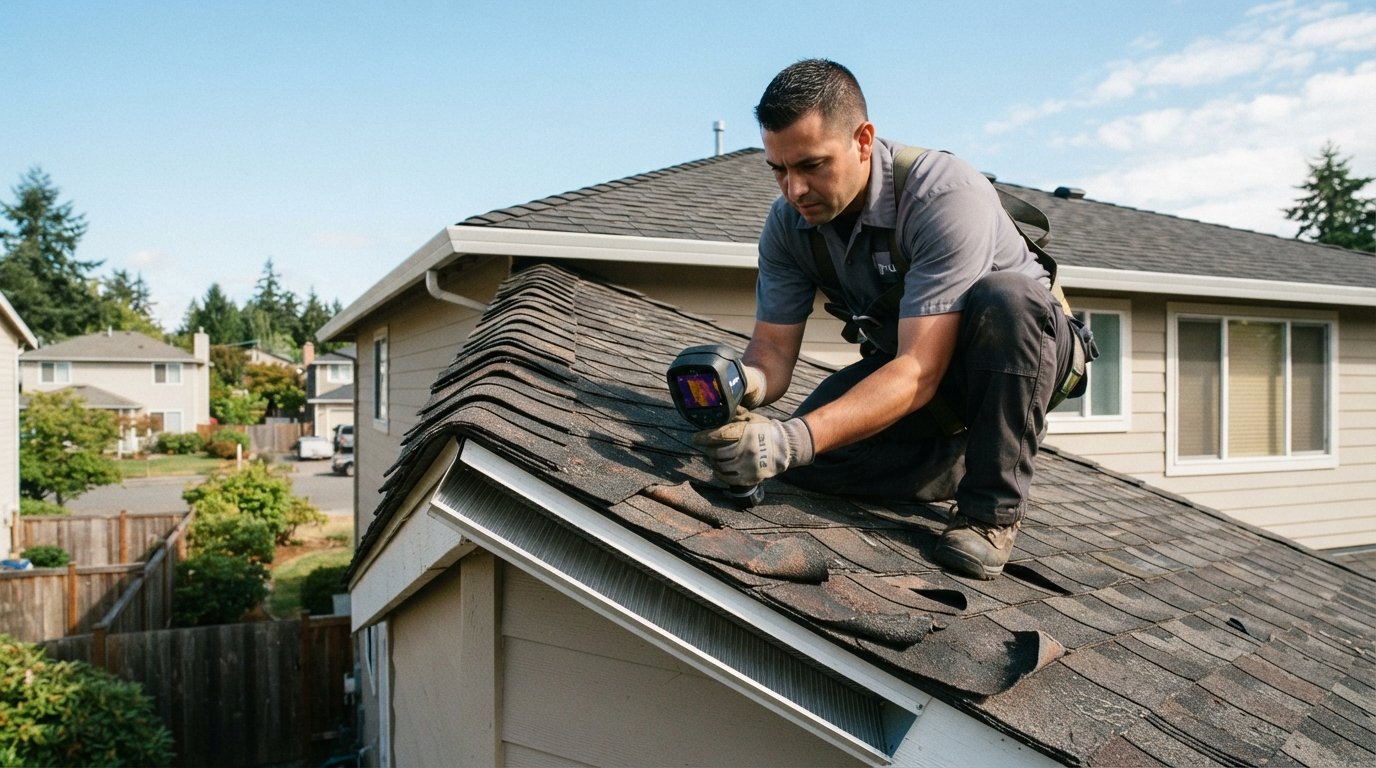
While you can perform a visual check from inside your attic, assessing the true condition of your roof ventilation often requires a professional eye. A trained roofing contractor can measure the actual ventilation area, check for hidden blockages, and identify signs of moisture damage that you might miss. If you are planning any roof repair or replacement, that is the perfect time to upgrade your ventilation system, as the contractor already has easy access to the roof deck.
Upgrading ventilation is one of the most cost-effective investments you can make during a roofing project. The added cost is minimal compared to the price of a new roof, but it dramatically extends the lifespan of your roofing materials. Furthermore, proper ventilation improves indoor air quality and makes your home more energy-efficient, which is a significant selling point if you ever decide to put your house on the market.
If you suspect your attic ventilation is inadequate, or if you are simply planning a new roof installation, contact a qualified local roofer for an inspection. They can help you design a system that meets building codes and manufacturer warranty requirements for your specific home. In our guide on roof maintenance in Wisconsin, we explain how regional climates demand specific ventilation strategies to combat snow and ice, highlighting why a one-size-fits-all approach rarely works. For a broader look at your home’s overall health, you can also explore how ventilation integrates with other systems like HVAC and insulation.
The Financial Case for Prioritizing Ventilation
Many homeowners hesitate to invest in attic ventilation because it does not offer the immediate visual appeal of new siding or windows. However, the financial case for proper ventilation is compelling. A well-ventilated attic can extend the life of your asphalt shingle roof from a typical 15 to 20 years up to its full 30-year warranty period. Given that the average roof replacement costs between $8,000 and $15,000 or more, deferring that expense by even five years represents significant savings.
Additionally, you will see immediate savings on your monthly utility bills. By reducing heat buildup in the summer and preventing moisture damage in the winter, you lower the workload on your HVAC system. Over the course of a year, these savings can amount to hundreds of dollars, effectively paying for the ventilation system itself within a few years. This is why professionals consistently rank attic ventilation among the highest-ROI improvements for roof health.
When you are ready to take action, obtaining multiple quotes is the smartest way to ensure you get a fair price for ventilation upgrades or roof repairs. A platform like FreeQuotes.Contractors can connect you with pre-vetted local professionals who can provide free, no-obligation estimates for your project, allowing you to compare pricing and services without any pressure.
In conclusion, attic ventilation importance for roof health cannot be overstated. It is the unsung hero that protects your investment from the inside out. By ensuring your attic has a balanced system of intake and exhaust vents, and by keeping those pathways clear of insulation and debris, you are taking one of the most effective steps to ensure your roof lasts its full lifespan and your home remains comfortable and energy-efficient for years to come. Do not wait for the first sign of rot or a leaking roof. Schedule an inspection today and give your roof the breathing room it needs to protect everything beneath it.
Learn more about Roof Repair or Maintenance for guides, costs, and what to expect.
Compare Roof Repair or Maintenance Pros Near You
Enter your ZIP code to compare top-rated local professionals and request free quotes.