
A Homeowner’s Guide to Siding Replacement Quotes
Understand siding replacement quotes to budget wisely. Our guide explains cost factors, what to look for, and how to choose the right contractor for your home.

By Eric Andrew
Learn more about Siding Installation for guides, costs, and what to expect.
Compare Siding Installation Pros Near You

Enter your ZIP code to compare top-rated local professionals and request free quotes.
Getting a quote for new siding can feel overwhelming. You know your home needs an update, but the numbers you hear or see online seem to vary wildly. It’s hard to know what’s fair, what’s included, and how to compare one estimate to another. Understanding your siding replacement quote is the first step to making a smart, confident investment in your home’s future.
Understanding Siding Replacement Quotes
A siding replacement quote is more than just a final price. It’s a detailed proposal from a contractor that outlines the scope of work, materials to be used, project timeline, and total cost. Think of it as a roadmap for your entire project.
A good quote protects both you and the contractor by setting clear expectations. It should break down costs so you can see exactly where your money is going, from materials and labor to necessary prep work and cleanup.
The Difference Between an Estimate and a Quote
Often, these terms are used interchangeably, but there’s a key difference. An estimate is a best-guess approximation of costs, which can change. A quote (or fixed-price estimate) is a formal offer to do the job for a specified price. For budgeting purposes, you want a firm quote.
Why It Matters for Homeowners
Your home’s siding is its first line of defense against weather, pests, and time. A clear, detailed quote is your tool for ensuring this critical shield is installed correctly and durably. It transforms a major home improvement project from a source of stress into a manageable, planned upgrade.
Without a proper quote, you risk unexpected costs, subpar materials, or misunderstandings about the project’s scope. A thorough quote brings transparency, allowing you to compare contractors fairly and choose the one that offers the best value, not just the lowest price.
Ready for a clear, detailed quote on your siding project? Connect with our trusted siding professionals today for a free, no-obligation assessment. Call us at (555) 123-4567.
Common Issues and Their Causes
Homeowners often face confusion when quotes differ significantly. This usually isn’t a sign of dishonesty, but rather a difference in what’s being proposed. One contractor might be quoting for a basic tear-off and replacement, while another includes repairing rotted sheathing or upgrading trim.
Another common issue is vague line items. A quote that just says “labor” or “materials” doesn’t help you understand the quality or quantity. This vagueness can lead to change orders and added costs later.
- Hidden Costs: Failing to include disposal fees, permit costs, or repairs to underlying damage.
- Material Quality Variance: Quoting for different grades or thicknesses of siding without specifying.
- Scope Differences: One quote may include wrapping windows and doors, while another treats it as an add-on.
How Professionals Fix the Problem
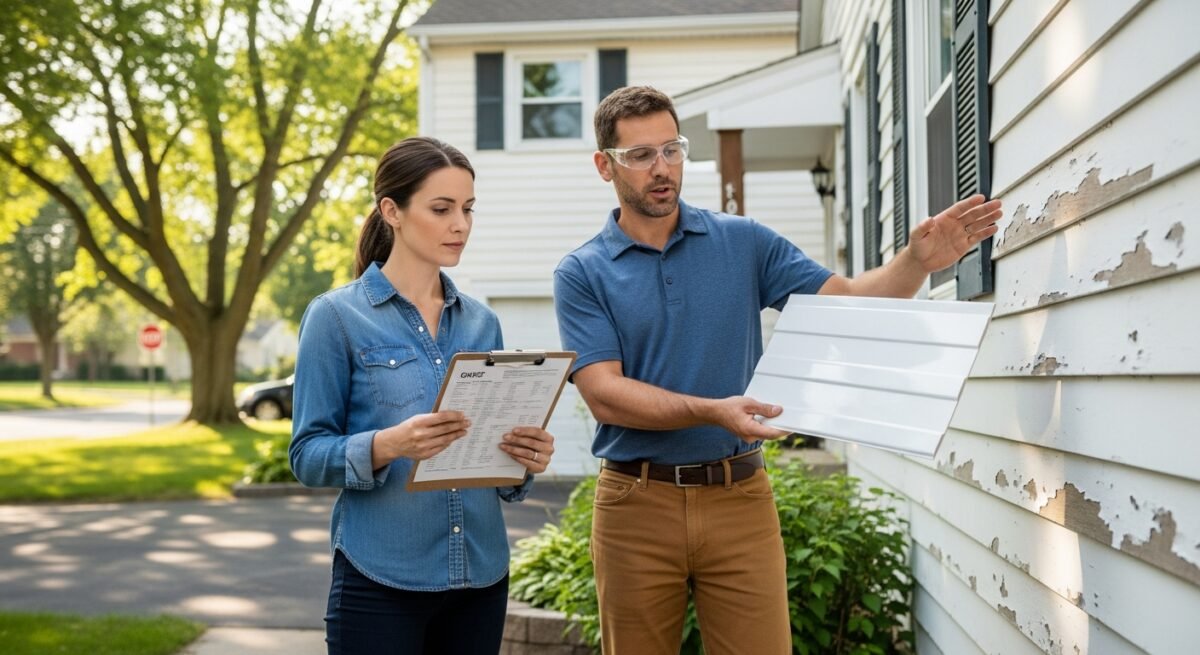
A professional contractor starts with a thorough on-site inspection. They don’t just measure your walls; they look for soft spots, water damage, and insulation issues behind the old siding. This allows them to create an accurate scope of work.
The repair and installation process is methodical. After obtaining your approval on the detailed quote, professionals will typically follow these key steps:
- Preparation & Protection: Safeguarding your landscaping, windows, and roof with tarps.
- Removal & Inspection: Carefully removing old siding and inspecting the sheathing for rot or damage.
- Repair & Prep: Replacing any compromised wood, applying a weather-resistant barrier (house wrap), and ensuring a flat, solid surface.
- Precise Installation: Installing the new siding according to manufacturer specs for optimal performance and warranty.
- Final Cleanup: Leaving your property clean and disposing of all old materials.
For a deeper look at the installation process, our resource on siding maintenance and installation outlines what true quality work entails.
Signs You Should Not Ignore
Your home often tells you when it’s time for new siding. Waiting too long can lead to more extensive and expensive damage to your home’s structure.
Persistent issues like high energy bills can also be a sign. Damaged or old siding compromises your home’s insulation, making your HVAC system work harder.
- Visible Damage: Cracked, warped, or loose siding panels.
- Moisture Problems: Peeling interior paint, mold, mildew, or soft, spongy areas on your walls.
- Fading or Bubbling: Severe color fade or bubbles indicate material failure.
- Frequent Repainting: Needing to repaint wood siding every 4-6 years is a sign it may be time to replace.
- High Maintenance: Spending increasing time and money on caulking, patching, or painting.
Cost Factors and What Affects Pricing
Your final siding replacement quote is influenced by several key factors. The size and height of your home are the most obvious—more square footage requires more materials and labor. Complex architectural features like gables, turrets, or many corners increase the time and skill needed for installation.
Material choice is a major driver of cost. Vinyl siding is often the most budget-friendly, while fiber cement, engineered wood, and natural materials like stone or brick veneer come at a higher price point. Each material has different longevity and aesthetic appeal. For example, understanding the unique considerations for mobile home siding replacement costs can help with planning for that specific home type.
Don’t let uncertainty hold you back. Get a transparent quote that details all cost factors for your unique home. Contact our expert siding team for a comprehensive evaluation. Call (555) 123-4567 to get started.
How To Choose the Right Professional or Service
Getting multiple quotes (we recommend at least three) is the single best way to choose a contractor. Compare them line-by-line, not just the bottom line. Look for detail, clarity, and a willingness to answer all your questions.
Always verify licensing and insurance. A reputable contractor will gladly provide proof of both general liability and worker’s compensation insurance. Check online reviews and ask for references to see past work. Finally, ensure they offer strong warranties on both labor and materials.
Long-Term Benefits for Your Home
Investing in new siding pays off for years. Immediately, you’ll enjoy enhanced curb appeal and a renewed sense of pride in your home’s appearance. Your home will be better protected from rain, wind, and sun, preventing costly structural repairs.
Energy efficiency improves dramatically with modern siding systems and proper insulation, leading to lower utility bills month after month. You’ll also gain peace of mind with increased fire resistance (in some materials) and reduced maintenance. Ultimately, quality siding is a durable, long-term upgrade that boosts your home’s value and your day-to-day comfort.
Frequently Asked Questions
How long does a siding replacement typically take?
For an average single-family home, a professional crew can typically complete a full siding replacement in 5 to 10 days. This depends on the home’s size, material chosen, weather conditions, and any unforeseen repairs needed once the old siding is removed.
Should I be home during the siding installation?
It’s not strictly necessary, but it can be helpful to be available, especially at the start and end of each day. You should ensure the crew has clear access to all exterior walls, including moving vehicles, furniture, and decorations from the work area.
Will new siding really lower my energy bills?
Yes, significantly. Modern siding acts as a thermal shell for your home. When installed with proper backing insulation or over updated house wrap, it reduces air infiltration and helps maintain consistent indoor temperatures, reducing the workload on your heating and cooling systems.
What is the most durable siding material?
Fiber cement siding (like James Hardie) is renowned for its exceptional durability. It resists rot, insects, fire, and wind damage and can last 50 years or more with proper maintenance. Metal siding is also extremely durable and long-lasting.
Does siding replacement require a permit?
In most municipalities, yes. A reputable contractor will handle pulling the necessary building permits. This ensures the work is inspected and meets local building codes, which is crucial for your safety and home’s resale value.
Can I install new siding over my old siding?
Sometimes, but it’s not generally recommended. Installing over old siding prevents a proper inspection of the sheathing for water damage or rot. It can also trap moisture and violate manufacturer warranties. A full tear-off is almost always the better, longer-lasting solution.
How do I maintain my new siding?
Maintenance is minimal with modern materials like vinyl or fiber cement. An annual gentle wash with a garden hose or a soft brush and mild soap is usually sufficient to remove dirt and grime. Regularly check caulking around windows and trim and clear debris from the siding’s bottom edge.
Are there financing options for siding replacement?
Many reputable contractors offer financing plans. Additionally, homeowners can explore options like home equity loans or lines of credit. Some energy-efficient siding upgrades may even qualify for specific rebates or tax credits—your contractor can help advise you.
Understanding your siding replacement quote empowers you to make the best decision for your home and budget. By knowing what to look for and which questions to ask, you can move forward with confidence, securing a beautiful, durable exterior that will protect and enhance your home for decades. The right quote is your first step toward a successful, stress-free transformation.
Learn more about Siding Installation for guides, costs, and what to expect.
Compare Siding Installation Pros Near You
Enter your ZIP code to compare top-rated local professionals and request free quotes.